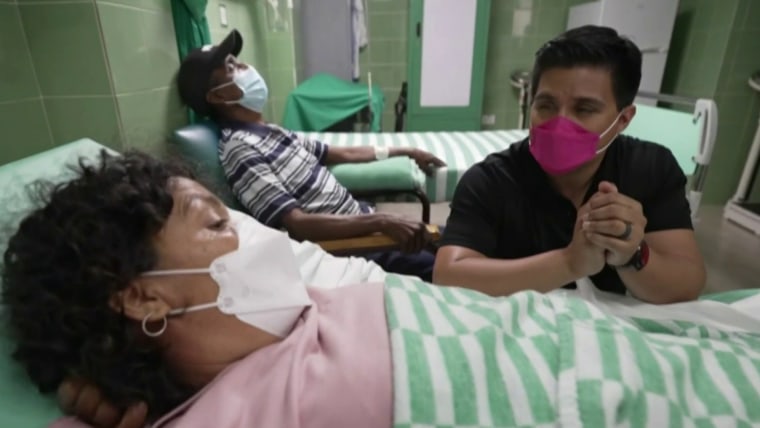
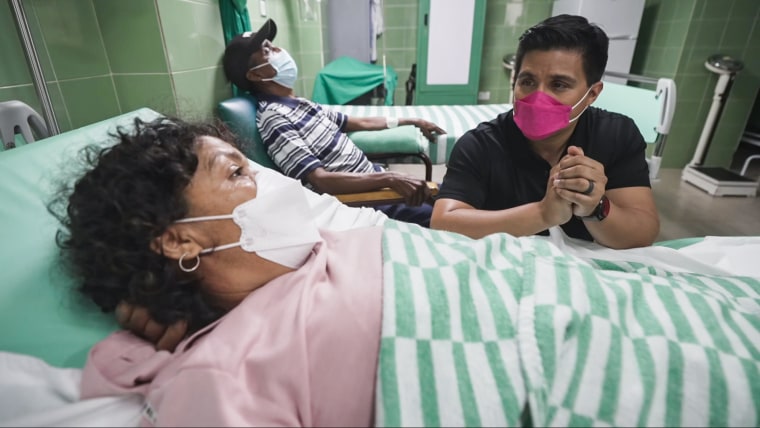
HAVANA — Yonelkys García, 44, a housewife and mother of two, finds it so difficult to travel to the hospital to treat her acute myeloid leukemia that she now stays at the facility one week at a time.
García has been in treatment for over a year at the Institute of Hematology and Immunology and is thankful to have access to the hospital — one of the best on the communist-run island — but acknowledges that even there she faces constraints.
“It has been tough in every sense ... Sometimes the institute has been out of many medications, and I have had to call my friends and family in other countries to send me my medication,” García said.
As Cuba’s economic crisis deepens and amid the fuel shortages and the blackouts, hospitals have been hard hit, leaving patients in the dark and medicine at risk of spoiling.
Cuba’s government granted NBC News rare access inside the Institute of Hematology and Immunology, a research facility in the capital where they treat difficult cases from across the island that are referred there.
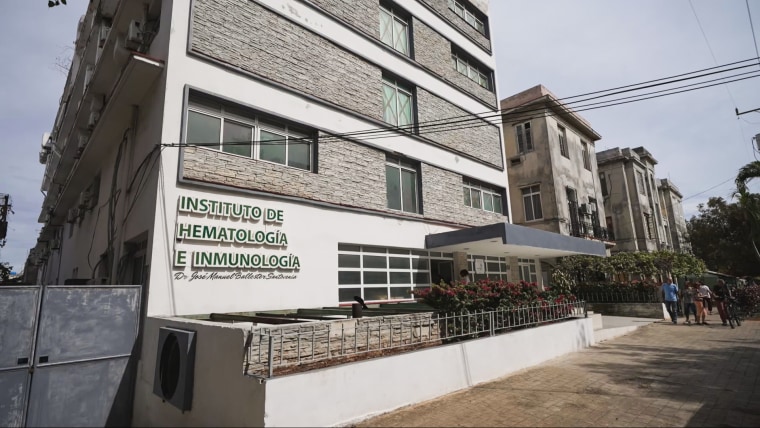
Even at this top hospital, which has more resources than others across the island, doctors and nurses are grappling with the complexities of treating patients under serious constraints.
“I haven’t lost patients due to this situation,” said Martin Hernández Isas, a hematologist at the institute who walks 20 miles from his home to get there.
“They have done the possible and the impossible to get here," he said of his patients. Staff at the hospital said that while their patients have been lucky, that may not be the case across the island.
Blackouts and shortages are not new to Cuba. A severe economic crisis has been unfolding since 2020, following President Donald Trump's tightened economic sanctions during his first term, the coronavirus pandemic which crippled the island’s vital tourism industry, and fewer shipments of fuel from close ally Venezuela as they dealt with their own economic woes.
But in recent weeks Cuba’s economy has taken a hit from Trump’s oil blockade of the island, as his administration puts pressure on the Cuban government.
The lives of everyday Cubans have been upended and now revolve around when they have a few hours of power. But among the most vulnerable on the island are those who are dealing with illnesses.
Staff at the Institute of Hematology and Immunology have had to strategize, reorganize and be flexible with schedules and work hours. The laboratories used to work five days a week. Now they’re down to two days in order to save fuel.
One of the greatest challenges for patients is access to transport from their homes. Some rely on electric tricycles or are fortunate enough to have someone take them to the hospital. Others are forced to pay a taxi, but rides' prices are out of reach to the average Cuban.
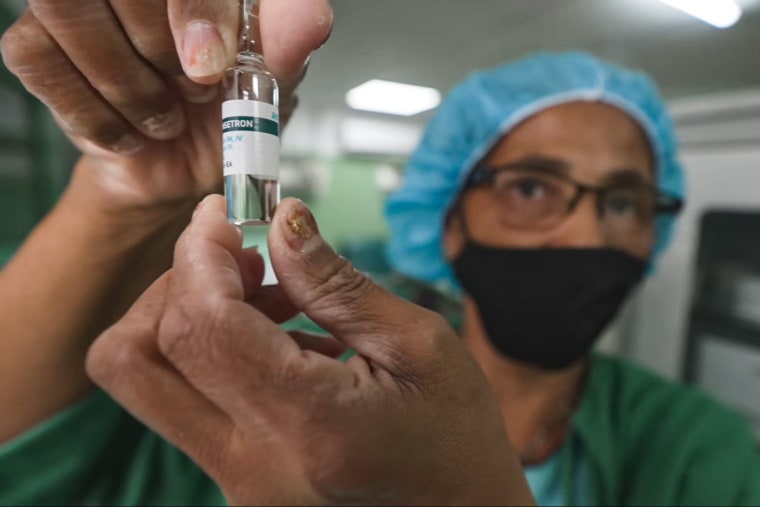
Access to medication is a problem for patients. “We have to resort to them often asking their relatives [for medicine] or buying them on the black market,” said Lucelia Leyva Calderón, a doctor and deputy director of the hospital.
It’s common for Cuban Americans to send medicine, syringes and other supplies to hospitalized relatives on the island.
Some doctors make do with what they have.
“With 1 ml that a patient doesn’t use, with 2 ml left over from another patient’s vial, we pool it together so that no one is left without their medication,” Hernández Isas said.
"The blackout affects us,” said Hernández. He said that when they lose power at the hospital, they turn on a generator.
But there isn't always fuel available for the generator.
Norma Fernández, a nurse, said sometimes they lose power two or three times a day. The outages can last anywhere between one and 8 hours. She said this affects medication that needs to be refrigerated.
She said if the outage is only an hour long, the medications can stay cold enough, but when it's eight hours, "it’s already difficult because there are patients who come to the institution, require some of the medications and, of course, the staff has to open the fridge and access medications," Fernández said.
While the hospital hasn’t reported any deaths due to shortages, it’s a fear on the minds of many.
“It is very difficult,” said Leyva Calderon. “The hardest thing for a doctor is losing a patient. That is one of the hardest things I think there is, for everyone.”

