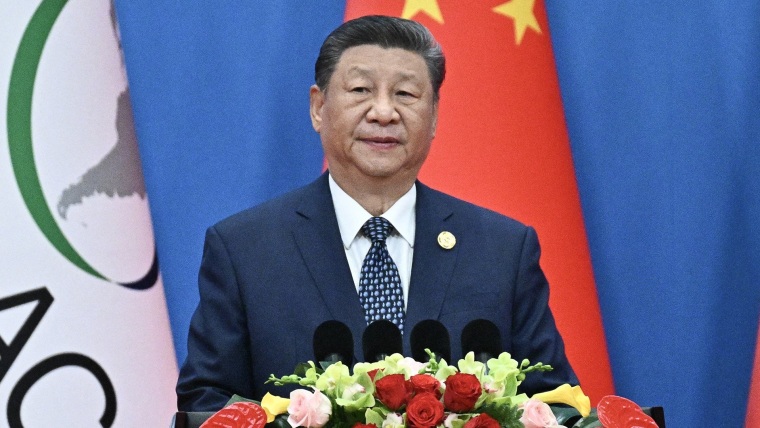
HONG KONG — The United States will start “aggressively” revoking the visas of Chinese students, Secretary of State Marco Rubio said Wednesday, including those with connections to the ruling Chinese Communist Party or studying in critical fields.
The announcement is the latest move in the Trump administration’s campaign against U.S. universities and international students in particular, after it revoked thousands of students’ visas, detained or deported other students over political activism and sought to bar international students from enrolling at Harvard University.
Rubio said in a statement that visa criteria would also be revised to “enhance scrutiny” of all future visa applications from the People’s Republic of China and the Chinese territory of Hong Kong.
“Under President Trump’s leadership, the U.S. State Department will work with the Department of Homeland Security to aggressively revoke visas for Chinese students,” he said.
China said Thursday that the United States was “unjustifiably” canceling Chinese student visas “under the pretext of ideology and national security.”
“This politically discriminatory move exposes the hypocrisy of America’s long-proclaimed values of freedom and openness and will only further damage the United States’ international image and credibility,” Mao Ning, a spokesperson for the Foreign Affairs Ministry, said at a regular briefing in Beijing.
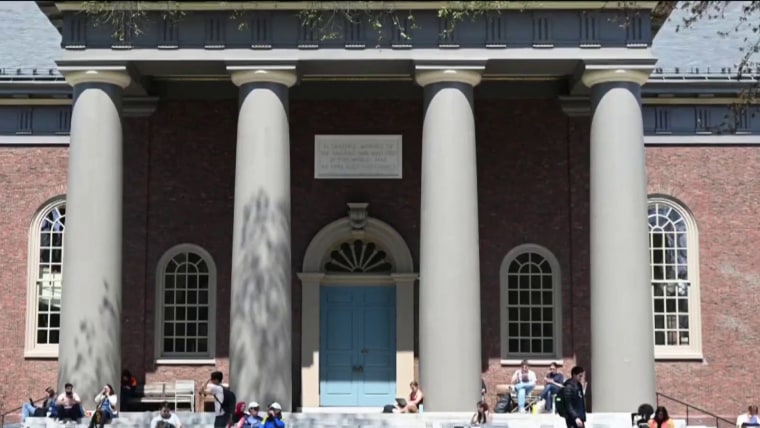
China is the second-biggest source of international students in the United States after India, though numbers have been dropping in recent years amid growing U.S.-China tensions and disruptions from the Covid-19 pandemic.
About 277,000 Chinese students were in the United States in the 2023-24 academic year, down from a peak of more than 370,000 in 2019. By contrast, there were only about 800 Americans studying in China last year, down from a peak of about 15,000 in 2014.
Though Rubio did not specify what he meant by “critical fields,” the United States and China are concerned about each other’s advancements in strategically sensitive areas such as biotechnology, quantum computing and artificial intelligence.
It is also unclear what Rubio meant by “connections” to the Chinese Communist Party.
There were more than 99 million members of the Chinese Communist Party as of the end of 2023, or about 7% of China’s 1.4 billion people, official figures showed. The party also runs the Communist Youth League, which has about 74 million members ages 14 to 28, with some overlap between the two groups.
Up to 75% of university students in the Chinese capital, Beijing, which has the most higher education institutions in the country, apply for party membership during their undergraduate years, according to a paper published in 2016.
Another study in 2014 found that the youngest party members are more likely to report self-interest, such as helping their careers, advancing politically and improving social status, as their reasons for joining.
John Burns, an emeritus professor at the University of Hong Kong who specializes in Chinese politics and governance, said the move to revoke visas for Chinese students showed that the United States is “paranoid” about the Chinese Communist Party.
However, the American government has “no independent way” of verifying whether a Chinese student is a party member unless individual students or people they know reveal it, Burns said in a phone interview Thursday.
The best students in China’s elite universities are approached by the party and asked to join, Burns said, and it’s “probably a wise decision on their part,” as the party is the “network of all networks” to get ahead in China.
“Pragmatism is the order of the day,” he said. “Chinese people are not more or less pragmatic, I would say, than anyone else.”
Burns said the loss of students from China or other countries would do “huge damage” to the advancement of science and tech in the United States.
“They need to be recruiting the best of the best — wherever they’re from — not based on some ideological bias,” he said.
