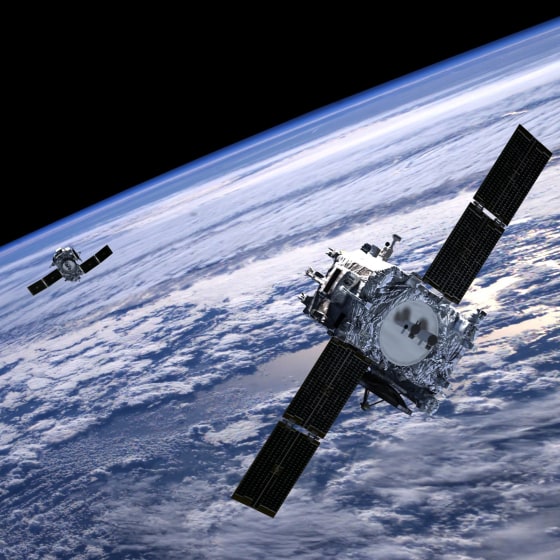
A NASA spacecraft launched on a mission to study massive particle ejections from the sun has finally phoned home after nearly two years of silence.
Once a month, for the past 22 months, scientists have leveraged the power of the antennas in NASA's Deep Space Network hoping for a sign from the missing STEREO-B spacecraft while its twin, STEREO-A, has continued to operate on its mission to study the sun.
The twin probes, also known as the Solar and Terrestrial Relations Observatories, were launched in October 2006 on what was supposed to be a two-year mission, but, like many NASA spacecraft, they have lasted much longer.
Related: "How NASA Plans to Get Us to Mars"
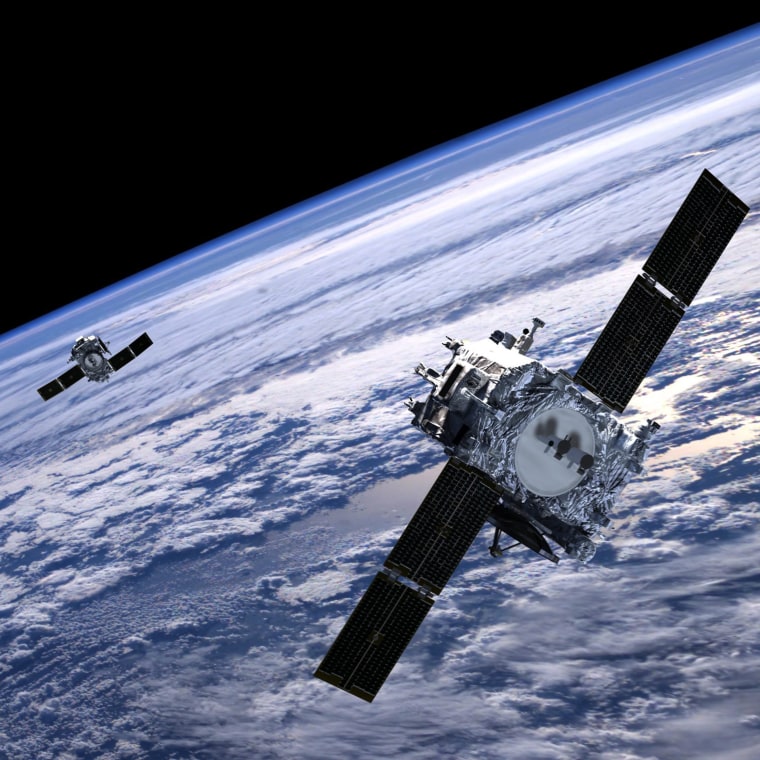
After performing a reset command on STEREO-B on Oct. 1, 2014, NASA lost contact with the spacecraft. That changed on Sunday, when STEREO-B sent its first contact in nearly two years, the space agency announced.
"I think we spent 22 months in denial," Joe Gurman, a project scientist on the STEREO mission, told NBC News. "The mission can achieve interesting science with one spacecraft, but there are even better things we can do with two."
There are plenty of unknowns, Gurman said, including where the spacecraft is pointing and the state of its propellant, which is used for maneuvers.
Gurman said he hopes to be able to turn on a computer this week to learn more about the health of the spacecraft.
"If and when we get to the point of turning on that computer, we will be getting data from the subsystems about once every five minutes," he said. "We'll be able to start figuring out the states much more precisely."
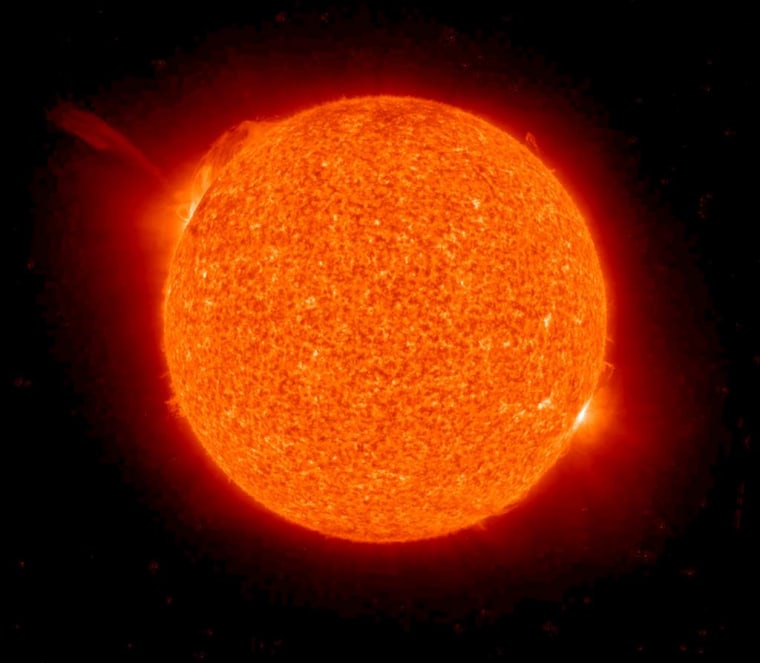
Both STEREO probes were inserted into heliocentric orbits, with one ahead of Earth and the other behind, allowing them to observe the sun from new vantage points.
In 2011, the twin probes sent back their first images of the entire sun, giving a spherical view of the solar action.
As for the likelihood of what may happen with STEREO-B after this week, Gurman isn't taking any bets.
"Everything in the space business involves risk, and what we try to do before we launch is manage that risk. Now we are getting into regimes we never designed the spacecraft to be in," Gurman said.
"We have to make our best guesses based on physics, engineering, and at some point you take a gulp and a deep breath and send a command."