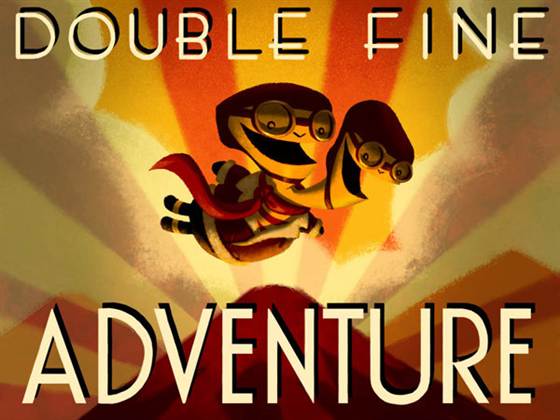
The Double Fine Kickstarter has been updated once more. This time, new incentives have been added to the mix, mostly to address the fact that many of the previous ones are no longer available. There's also an accompanying video: a chat between Tim Schaffer, head of Double Fine, and one of the true pioneers of the adventuring gaming genre, Ron Gilbert, who will also help craft the upcoming title.
For at least $30, you can get a digital soundtrack of the documentary. For at least $60, there is a PDF filled with concept art, excerpts from the script, and other behind the scenes tidbits from the game. For at least $100, there's a special edition package containing both the game disc and either a DVD or Blu-ray of the documentary. For at least $500, you can get a limited edition, hardcover book.
But the most compelling part of the update is the conversation between Schaffer and Gilbert, which is over half an hour long and was shot before the Kickstarter started:
Much is revealed in the chitchat. In addition to being the creator of various classics of the adventure gaming genre, namely "Adventure Island" and "Maniac Mansion,” Gilbert is also known for being outspoken and opinionated. In the just few couple of minutes, he admits that adventure games are sometimes more fun to make than to actually play. Schaffer’s response: "But is that fair?"
The biggest problems with adventure games, according to Gilbert, are backwards puzzles: "You are given the key before you see the locked door," -- as well as "completely ridiculous” solutions to problems that would have only been solved via trial and error, or worse, mindlessly choosing every option. After finishing each puzzle, the player should feel as if it was a fair challenge, believes Gilbert.
As for why adventure gaming has died in popularity, Gilbert doesn't see it that way -- other forms of games simply became more popular. Another interesting topic is the very definition of adventure games: "Sometimes an adventure game is not about going on an adventure. It's about puzzle solving, intellectually working your way through."
Adventure games are ultimately about "quiet contemplation," and having fun when thinking about the game’s challenges, even when you're not sitting in front of a computer monitor. It's about stepping away and working out the solution slowly, or it can just hit when walking the dog or taking a shower.
Unfortunately, this goes against what most publishers believe is acceptable in a video game. Their train of thought is along the lines of, It's not okay to be stuck. Though Schaffer also points out, there's "a fine line between entertaining confusing and non-entertaining confusion."
Gilbert wonders if modern gamers have the patience for adventure gaming. It doesn't help that there are such a large number of games available. Back in the day, options were comparatively slim. You could step away, think about a problem, and then return. But with so many games vying for a player's attention, it's often hard to stay engaged.
Gilbert also wishes games didn't have to be so long. Shorter is better, he believes, to allow for more focused experiences. This is an idea that may be a hard sell to those who constantly complain about today's titles being too costly, compared to how much gameplay they offer.
The end of the video has both Schaffer and Gilbert brainstorming, and the interesting part is how conservative their ambitions are, since they had no idea how successful the Kickstarter would be. There are various points in which subtitles appear to reflect how, due to the success of the fund raising initiative, plans have expanded.
Matthew Hawkins is an NYC-based game journalist who has also written for EGM, GameSetWatch, Gamasutra, Giant Robot, and numerous others. He also self-publishes his own game culture zine, is part of Attract Mode, and co-hosts The Fangamer Podcast. You can keep tabs on him via Twitter, or his personal home-base, FORT90.com.