Editorial Standards

Latest News Today maintains rigorous editorial standards. Our team verifies information from trusted sources and provides context to help readers understand complex stories.

Last Updated: Sunday, May 17, 2026 at 04:41 PM
Category: Science

Editor's Note

Latest News Today provides comprehensive coverage and analysis of breaking news stories. This article is part of our ongoing coverage of nasas newest x ray telescope rockets orbit rcna8210, bringing you verified information from trusted sources with added context and expert perspective.

Why This Matters: Understanding the full context of this story helps readers make informed decisions and stay updated on developments that impact our community.

NASA’s newest X-ray telescope rockets into orbit

Scientists said the observatory — actually three telescopes in one — will unveil the most dramatic and extreme parts of the universe as never before.
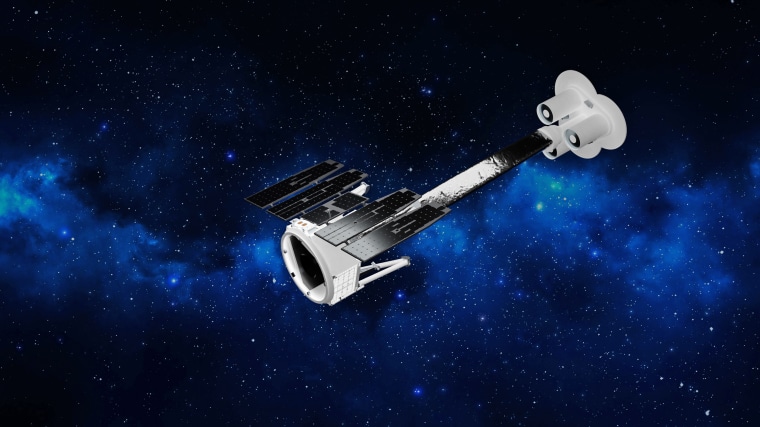
Image:
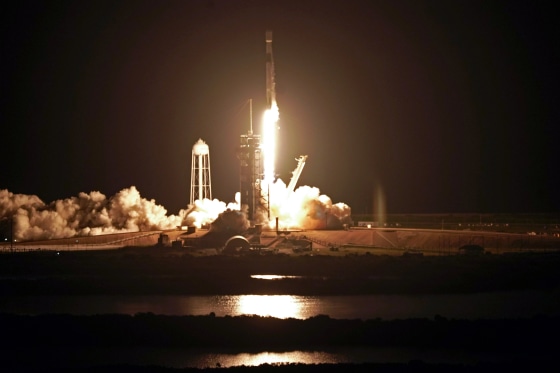
A SpaceX Falcon 9 rocket lifts off carrying NASA's Imaging X-ray Polarimetry Explorer (IXPE) spacecraft from at the Kennedy Space Center on Thursday. John Raoux / AP

CAPE CANAVERAL, Fla. — NASA’s newest X-ray observatory rocketed into orbit Thursday to shed light on exploded stars, black holes and other violent high-energy events unfolding in the universe.

SpaceX launched the spacecraft on its $188 million mission from Kennedy Space Center. It’s called IXPE, short for Imaging X-ray Polarization Explorer.

Scientists said the observatory — actually three telescopes in one — will unveil the most dramatic and extreme parts of the universe as never before.

NASA’s Imaging X-ray Polarimetry Explorer (IXPE).
NASA’s Imaging X-ray Polarimetry Explorer (IXPE).NASA

“IXPE is going to open a new window on the X-ray sky,” Brian Ramsey, NASA’s deputy principal scientist, said this week.

Operations should begin next month. NASA is partnering with the Italian Space Agency on the project.