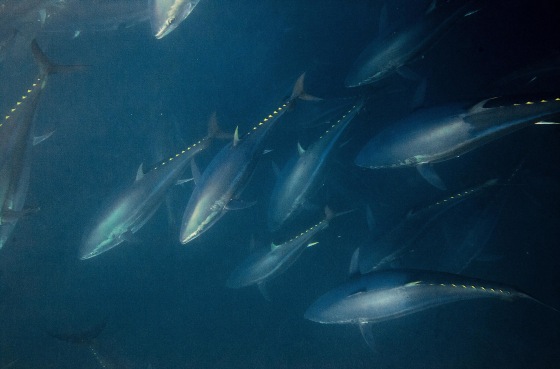
The biomass of the world’s predatory fish — not just sharks but also tuna, swordfish, barracuda, sea bass and others — has dropped by two-thirds over the past 100 years, according to a study by Canadian and European researchers that warns about the danger of overfishing such larger species. And the research, based on computer modeling, says things seem to be getting worse: 55 percent of the decrease occurred in the past 40 years, with a sharp decline in 1970-1990. It’s a matter of overfishing of bigger species that people like on their dinner tables, according to the study, led by Villy Christensen of the University of British Columbia in Vancouver.
Some species at the bottom of the food chain have benefited. The study found that the biomass of prey fish has increased over the past century, likely the result of fewer predators as humans focused on catching those species. So, the study says, the world’s oceans will have fish in the future, but small prey fish will dominate. That’s a worry, the study says, because “these organisms are short-lived and are much more vulnerable to environmental fluctuations.”
IN-DEPTH
- Obama Expands Ocean Preserve: Now It's the Biggest
- Desperate Fishermen Driven to Piracy by 'Flag Hoppers'
- Consider the Maine Lobster, While You Still Can