Republican legislative leaders in Tennessee released a congressional map proposal Wednesday that they hope to put in place before the midterm elections that would eliminate the state's only Democratic-controlled district.
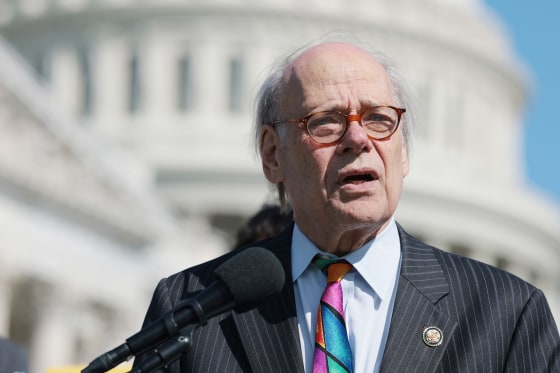
The new map, which comes one week after the U.S. Supreme Court's major ruling limiting the use of race in redistricting, would carve up a majority-Black district based in Memphis that's represented by Democrat Steve Cohen.
“The Supreme Court has opined that redistricting, like the judicial system, should be color-blind. The decision indicated states like Tennessee can redistrict based on partisan politics,” state House Speaker Cameron Sexton said in a statement. “Tennessee’s redistricting will reduce the risk of future legal challenges while promoting sound and strategic conservatism.”
The suite of legislation Sexton and Senate Majority Leader Jack Johnson filed Wednesday also seeks to change a state law that allows lawmakers to enact new district maps only once each decade.
Sexton and Johnson said in a joint statement that they expect both chambers, where Republicans have sizable majorities, to hold floor votes on the proposal Thursday.
Tennessee’s primaries are scheduled to take place Aug. 6.
The proposed map means the Memphis metro area — home to more than 1 million people — could be divided into three different districts.
"No single representative would have an incentive to show attention to the issues and concerns with people who live there," said Kareem Crayton, vice president of the Brennan Center for Justice’s Washington, D.C., office, particularly since the map is designed to elect Republicans and Memphis is a stronghold for Democratic voters.
He added that Tennessee has three distinct regions, represented by three stars on the state's flag. The proposed congressional map crosses those historically and geographically distinct regions, tying voters from different media markets and time zones together.
Several Republican-controlled Southern states are rushing to consider redistricting efforts after the Supreme Court struck down Louisiana's map, which has two majority-Black districts, as an unconstitutional racial gerrymander.
Louisiana Republican officials moved to delay the state's May 16 House primaries to give lawmakers time to draw a new map.
In Alabama, Gov. Kay Ivey called lawmakers into a special session this week in preparation for them to act if the court allows them to implement a redrawn map that could result in an additional seat for the GOP. The state's primaries are currently scheduled for May 19.
And in South Carolina, Republican lawmakers are debating whether they will take up a new map. The state has one majority-Black district represented by longtime Democratic Rep. James Clyburn. South Carolina's primaries are June 9.
Other states where filing deadlines and primary dates have already passed are eyeing the 2028 election cycle for potential new maps.
The efforts continue the mid-decade redistricting fight President Donald Trump jump-started last year, when he urged Republican-led states to redraw their maps to protect the party's narrow House majority.
In total, eight states have enacted new maps over the past year that could result in an additional 13 seats for Republicans and 10 for Democrats.
Some of the maps still face legal battles. Virginia Democrats, for instance, are awaiting a state Supreme Court ruling on their redistricting plan that could net them four seats in the midterms.