For the better part of two years, Republican policymakers in states nationwide launched a deliberate, calculated effort to restrict voting rights -- the most sweeping effort in the United States since the Jim Crow era -- specifically to influence the outcome of the 2012 elections. The goal of voter-ID laws, voter-registration restrictions, and closed early-voting windows wasn't subtle: identify likely Democratic voters and try to limit their turnout.
It's hard to overstate the extent to which this backfired.
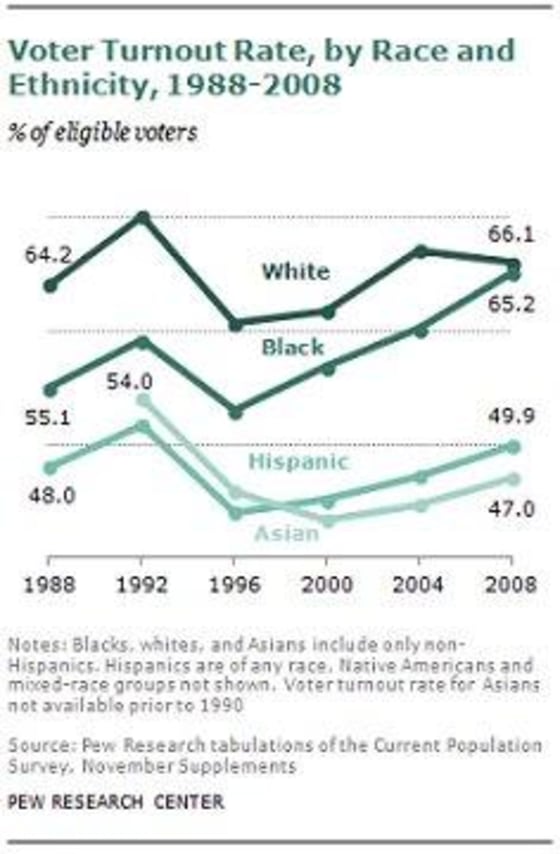
Blacks voted at a higher rate this year than other minority groups and for the first time in history may also have voted at a higher rate than whites, according to a Pew Research Center analysis of census data, election day exit poll data and vote totals from selected cities and counties. [...]
These participation milestones are notable not just in light of the long history of black disenfranchisement, but also in light of recently-enacted state voter identification laws that some critics contended would suppress turnout disproportionately among blacks and other minority groups.
This should, of course, be the starting point for a fascinating debate: did voting rates among African Americans go up despite GOP voting restrictions or because of Republican disenfranchisement efforts? In other words, did the "war on voting" set up hurdles that voters found easy to overcome, or did the restrictions inspire black voters to work even harder to make sure their voices were heard?
I'm inclined to agree with Josh Marshall's take: "I continue to think -- and I'm not alone in this -- that Republican sowed the wind with voter suppression tactics and reaped the whirlwind. Far from taking the edge off African-American turnout, which was the intent, it mobilized these voters to historic levels."