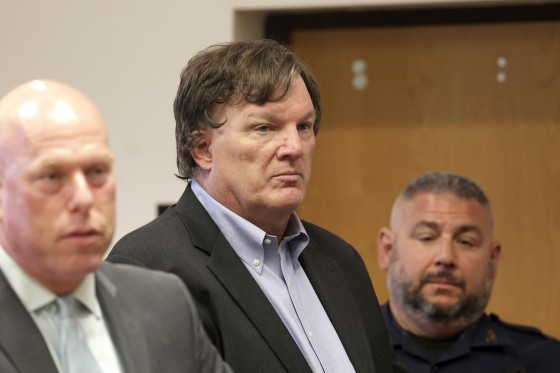
A host of DNA evidence can be used in the trial of a man accused in a string of Long Island killings, known as the Gilgo Beach murders, a New York judge ruled Wednesday.
Ruling in a Riverhead courtroom, Suffolk County Judge Tim Mazzei said prosecutors can use DNA evidence generated by Astrea Forensics in their case against Rex Heuermann.
The defense quickly filed a motion in an effort to block the evidence on new grounds, saying the DNA evidence violates New York public health law that states a for-profit lab cannot submit evidence in criminal cases in the state. But prosecutors have said they have a trove of other evidence, including a "blueprint" for the killings and cellphone tracking data, that ties Heuermann to the case.
Astrea Forensics uses new techniques to analyze old and highly degraded DNA samples, like the ones collected from the bodies of the victims.
The California lab's genome sequencing — which prosecutors say clearly links Heuermann to six of the seven victims he is charged with killing — was called into question because the lab's techniques have never been used as evidence before in New York.
The company claims it can extract extremely short sequences of DNA fragments from very old bones and strands of hair to produce a person's entire genetic sequence. Prosecutors called on experts in court to explain how scientists have previously used a similar technique in other projects, including mapping the genome of the Neanderthal, which was awarded the Nobel Prize in medicine in 2022.
The defense argued that the company's methods have not been thoroughly scrutinized and that they require further evaluation before they become a mainstay in criminal cases.
Mazzei's ruling Wednesday means DNA evidence identified through this process can be used in New York state in the future.
Heuermann was arrested in 2023 and charged with the killings of three women: Melissa Barthelemy, Megan Waterman and Amber Costello. Their bodies were among 10 found along Long Island's Gilgo Beach when police set out in 2010 to search for Shannan Gilbert, a 24-year-old aspiring actress from New Jersey.
In 2024, he was charged with the killings of four more women: Maureen Brainard-Barnes, Jessica Taylor, Sandra Costilla and Valerie Mack.
Heuermann has maintained his innocence in the slayings of the women.