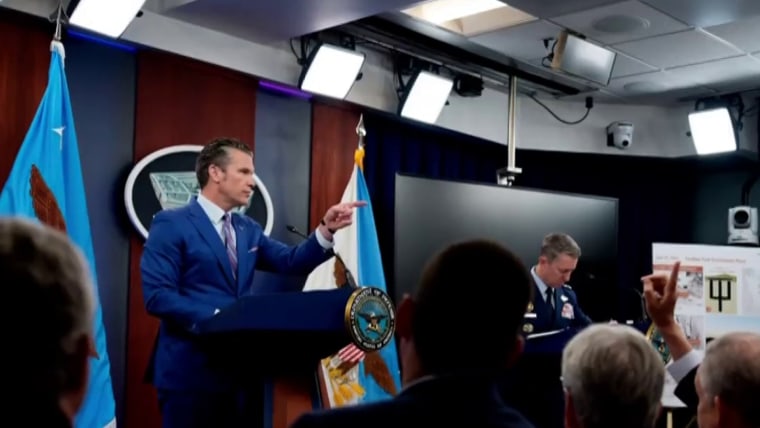
Five major broadcast news networks announced Tuesday that they will not sign the Pentagon’s new press policy before an afternoon deadline, joining several other media organizations that have objected to a set of rules that many journalists consider restrictive.
“Today, we join virtually every other news organization in declining to agree to the Pentagon’s new requirements, which would restrict journalists’ ability to keep the nation and the world informed of important national security issues,” NBC News said in a joint statement with ABC News, CBS News, CNN and Fox News Media.
“The policy is without precedent and threatens core journalistic protections. We will continue to cover the U.S. military as each of our organizations has done for many decades, upholding the principles of a free and independent press,” the news organizations added.
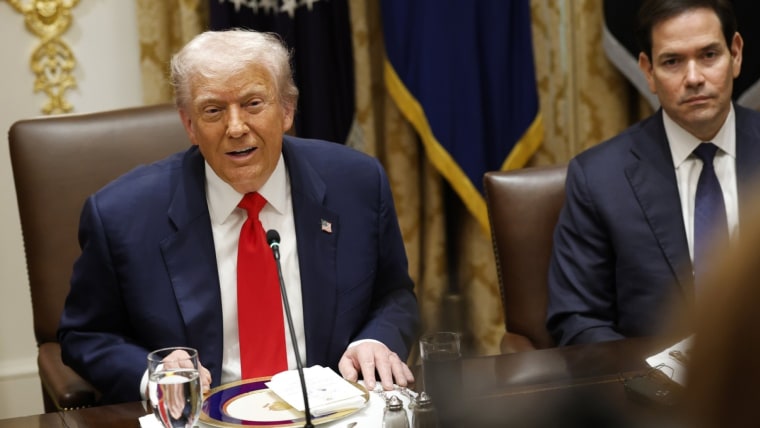
The new policy says reporters could have their press passes revoked if they publish information that has not been authorized for release by the Pentagon, even if the information is unclassified.
The deadline to sign the new policy is 5 p.m. ET Tuesday, according to the Defense Department. Any media professional who declines to sign has 24 hours to turn in their Pentagon press credential and “clear their spaces” inside the sprawling government complex.
“Pentagon access is a privilege, not a right,” Defense Secretary Pete Hegseth said in a post on X on Monday. Hegseth was previously employed by Fox News, where he co-hosted “Fox & Friends Weekend.”
In recent days, a wave of other news organizations announced they would not agree to the rules, including The Atlantic, The Associated Press, The Guardian, Newsmax, NPR, Reuters, The New York Times, The Wall Street Journal and The Washington Post.
“The Pentagon’s new press policy undermines the First Amendment and AP’s core values as an independent global news organization,” The Associated Press said in a statement.
“The restrictions impede the public’s access to information about their government and limit the people’s right to know. AP remains focused on continuing to produce strong independent coverage of the Pentagon in the public interest,” the AP added.
Hegseth responded to public statements from The Atlantic, The Times and The Post on X with the “waving hand” emoji: 👋.
The conservative cable channel One America News Network (OANN) appears to be the only outlet that has so far come forward publicly to say it signed the Pentagon policy.
“After thorough review of the revised press policy by our attorney, OAN staff has signed the document,” OANN president Charles Herring confirmed in an email to NBC News. (In the email, the word “revised” was bolded and underlined.)
The Pentagon’s policy also drew criticism from various press advocacy groups, such as the Committee to Protect Journalists, the National Press Club and the Reporters Committee for Freedom of the Press.