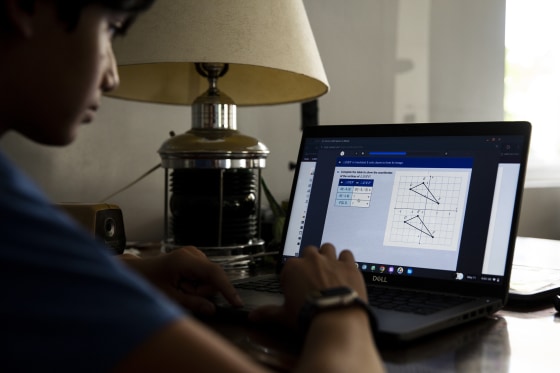
In Anchorage, Alaska, math tutor Katelynn Petersen has watched hundreds of students struggle to use the software. “They all hate it — it’s so boring and so monotonous,” she said.
In Rhode Island, school speech therapist Denise Champney said she’s seen children get so frustrated with the software’s animations and spoken prompts that one punched the screen of his Chromebook. “It is just incredibly infuriating,” she said.
In Los Angeles, eighth grader Ward Wooden agrees. “I’m losing brain cells every time I do a lesson,” he said.
They’re all complaining about i-Ready, which has quietly taken over America’s public school classrooms, reaching nearly 14 million students each year.
The i-Ready pitch is this: Teachers need help spotting children who are falling behind. Through personalized reading and math assessments that adjust questions based on students’ responses, the software identifies struggling students so that they can get extra support long before they take standardized tests.
It’s a promise that has proved attractive to administrators seeking to boost test scores. Since the private equity-backed company Curriculum Associates released i-Ready in 2011, it has become a juggernaut. Nearly one-third of students from kindergarten to 12th grade nationwide use i-Ready, including in nine of the 10 largest school districts.
But that growth has brought new scrutiny, and now i-Ready is facing a mounting backlash from parents, students and teachers who see it as a waste of time. Critics contend there’s no proof that the interactive lessons raise test scores. Teachers can’t see a student’s answers, just an overall score and sometimes areas for improvement, which some educators say makes it hard to know how to help.
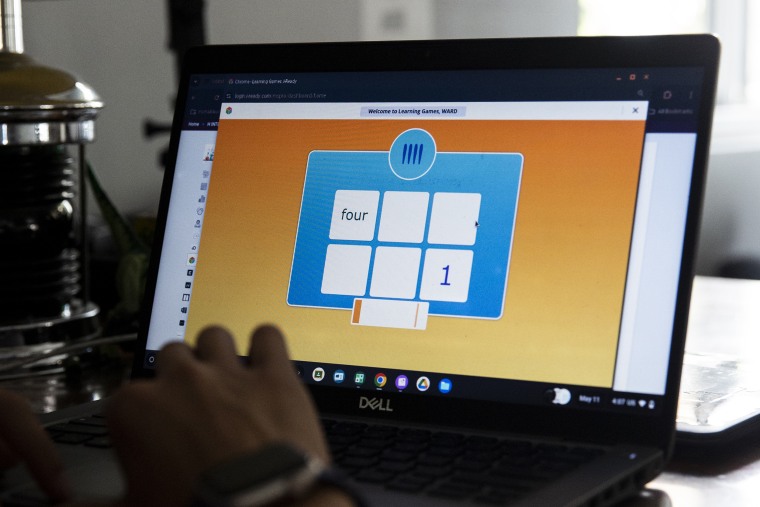
The software’s repeated animations of cartoon aliens named Plory and Yoop Yooply, along with instructions slowly read aloud without an option to skip, have left many students annoyed and disengaged. And since i-Ready results usually don’t count toward students’ grades, they often don’t see the point.
In recent months, a series of essays criticizing i-Ready circulated widely on social media. NBC News spoke to more than 40 school board members, administrators, teachers, parents, students, consultants and education policy researchers about their gripes. Parents describe their children breaking down in tears and saying they hate school. Teachers say it takes up valuable classroom time — often up to 90 minutes per week — when they can do nothing more than watch students tap on screens. “If you’ve been anywhere near the internet, you have seen concerns about iReady reach a fever pitch,” one Substack post began.
Do you have a story to share about tech in schools? Email reporter Tyler Kingkade.
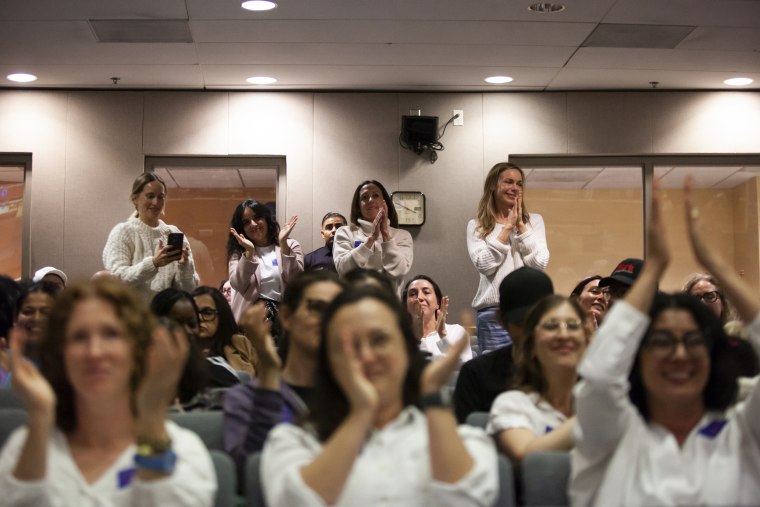
One of i-Ready’s biggest customers, the Los Angeles Unified School District, launched an audit last month following extensive complaints from parents, teachers and principals. Rocio Rivas, the school board’s vice president, said at an April 21 board meeting that she spoke to district educators about i-Ready, and “I have yet to hear a positive comment.” Dozens of parents burst into applause in response.
The revolt against i-Ready is intensifying as parents across the country question how much time their children spend on screens at school, and as some districts and state legislatures seek to set limits. Now, i-Ready is caught up in a broader debate over whether students should return to printed worksheets and handwritten essays and whether education technology companies are living up to their promises on improving student performance.
Curriculum Associates leaders have pushed back on criticisms, arguing in a series of recent blog posts that there’s a big difference between children using educational software like i-Ready versus scrolling social media. The company cites in-house white papers and research commissioned from other organizations showing some students’ test scores rose after using i-Ready’s personalized lessons. And the company says the time spent using i-Ready is minimal, about 5% of instructional time.
Kelly Sia, Curriculum Associates’ CEO, sees i-Ready’s financial success — it brings in hundreds of millions of dollars a year — as proof that the software is working.
“Teachers and administrators decide every year whether they want to hire or fire us,” Sia told NBC News. More than 90% of districts renew their i-Ready contracts, she said.
A ‘black box system’
Ward Wooden, the Los Angeles eighth grader, recently sat at a table in his backyard waiting for an animation on i-Ready to finish so he could answer geometry questions on his school-issued laptop. He had seen the introductory cartoon — which flashes a car, flowers, a blender, an alligator and more over a jazzy drumbeat — hundreds of times before, but he couldn’t skip it.
“I think it’s supposed to serve as a break or something interesting to keep you engaged, but all it does is waste more time,” he said.

After Ward completes an i-Ready lesson, he can check his overall score, but he can’t return to the questions to see which ones he got wrong or what the right answer was.
His father, John Allen Wooden, a writer and creative producer and one of more than a dozen parents who spoke to NBC News about i-Ready, finds this baffling. Wooden said he started researching i-Ready after hearing Ward and his classmates complain about it.
“I was just flabbergasted,” Wooden said, at “how miserable it makes kids.”
Wooden began publishing his findings in February, labeling i-Ready “digital snake oil” that has a “stranglehold on US classrooms.” He then opted Ward out of i-Ready, so his son no longer needs to do the weekly assignments.
“It’s a completely closed, black box system,” Wooden said, “and once administrators buy into the fact that these metrics are valid, they chase them.”

In interviews, 10 current and former teachers from New York, Pennsylvania, Georgia, Nevada and California described concerns about lost time and administrative demands. Some said i-Ready quizzes students on material they haven’t learned, such as asking a kindergartner “98 minus 17,” while some students said it repeats questions from year to year, and they have no way to skip material they already know. The teachers also said many students don’t take i-Ready seriously and purposely try to get low scores, since the more questions they get wrong, the easier the questions become.
Altair Maine, a high school math and science teacher in the North Hollywood neighborhood of Los Angeles, said i-Ready assessments turn him into a “glorified babysitter” of “kids staring at Chromebooks.” He cuts hands-on lab activities to make time for the tests.
“Everything comes at a cost, and there are only so many hours I get with the students,” Maine said.

In Anchorage, where Petersen tutors children in math, the school district agreed in 2020 to pay $6.75 million for i-Ready over seven years. Petersen is unimpressed with the software, which doesn’t allow students to show their work, and she said many students don’t take it seriously, which makes the data useless.
“They push the volume all the way down, and then they just start pushing buttons until the screen will change for them,” Petersen said. “They’re not learning anything.”
Corey Allen Young, a spokesman for the Anchorage School District, said administrators “observed positive trends” in students’ math proficiency on standardized assessments since purchasing i-Ready. “Based on these outcomes, ASD plans to continue using i-Ready as part of its math instructional program,” he said.
Ty Holmes, chief impact officer for Curriculum Associates, said the company continuously solicits feedback and tries to make changes to address complaints. This fall, the i-Ready benchmark tests will be shorter, he said, and the weekly lessons have become more interactive.
“We look at the feedback, and we try to make adjustments to the product,” he said. “But the reality is, we understand that not everyone — you know, 14 million kids — are going to love every single thing they do at school, but we try to get better every single day.”
From broke to $800 million in revenue
In 2008, Curriculum Associates was in crisis, with just enough cash left to run the business for about 82 days. Since its founding in 1969, the company had produced printed educational workbooks, but its business model of shipping thick binders of worksheets and learning disability assessments from a Massachusetts warehouse was no longer working.
Rob Waldron, who was CEO at the time, came up with a plan that turned Curriculum Associates into a technology company. Curriculum Associates created i-Ready at a moment when schools were adjusting their curricula to meet Common Core standards — academic benchmarks established in the 2010s — and when federal laws like No Child Left Behind meant schools were focused on improving their standardized test scores.

In 2017, the Boston-based investment firm Berkshire Partners bought an ownership stake in Curriculum Associates for an undisclosed but “significant” sum. The private equity outfit praised the i-Ready maker for its “remarkable growth.”
Curriculum Associates had 100 employees in 2008; by the time Waldron left at the end of 2024, the company employed 2,400 people and its annual revenue had risen to nearly $800 million.
I-Ready’s appeal had grown with the passage of the Every Student Succeeds Act in 2015, which required states to track academic growth in elementary and middle schools and establish consequences for schools whose students did poorly on annual math and reading assessments. Around the same time, Google began pitching Chromebooks to schools; today, about 9 in 10 schools provide a computer or tablet to each child.
Growing backlash to tech in schools
- In Los Angeles, a growing contingent of parents say school-mandated iPads are leading to behavior problems.
- Internal documents reveal Google’s work in schools aims to create a “pipeline of future users.”
- Parents are forming a loose network teaching one another how to opt their children out of school-issued Chromebooks and iPads.
- Lawmakers in 16 states proposed restrictions on classroom technology this year, including screen time limits.
In addition to offering teachers color-coded reports highlighting where children are struggling and how close they are to being at grade level, i-Ready also distributes lesson plans and curriculum materials and recommends that schools purchase teacher training. Curriculum Associates hosts webinars for parents and encourages schools to celebrate strong i-Ready results with banners and parties.
“At the end of the day, it’s about great teachers,” said Sia, the current CEO. “I-Ready is not the most important thing — we are one part. We’re a tool to support educators and help them save time.”
Curriculum Associates’ social media is full of teachers and principals testifying to i-Ready’s value. In a video the company posted in March, an elementary school principal in Virginia credited a 14% jump in math scores on state tests in part to the district using i-Ready data. A teacher in New York praised i-Ready in a video posted in April. “I live in the i-Ready data reports,” the teacher said. “I find that it’s easy to use, easy to understand.”
Jeff Lisciandrello, an education sales consultant, said i-Ready’s advantage over competing software — such as Renaissance STAR, IXL, NWEA MAP Growth and others — was its user-friendly dashboard for principals and administrators.
“That’s a smart business decision because the people who buy things are administrators,” he said. “Teachers generally don’t make the decision to purchase a particular product, especially one like i-Ready.”
At school board meetings, administrators often present i-Ready scores to show students’ progress, sometimes hailing it as a tool for accountability. In March, Sharon Ofek, a superintendent in Carmel, California, praised the software’s math lessons for teaching problem-solving skills rather than memorization of formulas. Rita Patel, a Carmel board member, responded, “I’m glad we’re starting them young.”
Some teachers feel ‘handcuffed’
In 2023, Jonathan Kryk, a language arts and social studies teacher at a K-8 charter school in Spring Hill, Florida, found out Curriculum Associates had selected him as an “Extraordinary Educator.” He thought it was “an amazing honor, because that’s how they market it,” he said.
Kryk accepted a free trip to Boston, where Curriculum Associates offered professional development to 30 teachers from across the country who demonstrated “best-in-class use of i-Ready.” The company quoted Kryk endorsing i-Ready on its website, in a podcast and in a news release.

But after the trip, Kryk changed his mind. The more he used i-Ready, he said, the more he saw how its results didn’t predict students’ success. Some students grew discouraged after acing i-Ready only to fail state standardized tests, and he said middle school students resisted using the software, which displayed childish cartoons to help them sound out words.
Even though his district required teachers to use i-Ready, he stopped and switched to small-group instruction and other materials provided by the state. He said the share of his seventh graders passing state reading tests more than doubled. But district administrators continued to send email reminders to use i-Ready, he said.
“Teachers aren’t being allowed to teach,” Kryk said. “When a teacher is essentially handcuffed to a certain program — even if the program isn’t working, or that child has been using that program from kindergarten to, say, seventh grade — you don’t have that authority to make that instructional decision that maybe I should use something else to help this child.”
The Hernando County School District, where Kryk teaches, disagrees with his assessment of i-Ready and plans to continue using it. The software “provides teachers with the necessary data and resources to differentiate their instruction to meet the needs of all students,” Aaron Ellerman, the district’s communications director, said in a statement.
Criticism of i-Ready is a frequent topic on Reddit and TikTok, where teachers describe how i-Ready’s larger benchmark assessments, which students take three times a year, eat up 40 hours of instruction time, or say that pressure related to the software is driving them to quit.
Amid these concerns, some researchers have questioned whether the software works.
Patrick Graff, an education policy researcher at the American Federation for Children, a nonprofit that promotes funding for children to attend private schools, wrote a thread on X in March that called the existing studies on i-Ready “weak and full of measurement tricks to make their product look better.” Some studies rely on the software’s own benchmark assessment to measure student outcomes and exclude students who don’t use the software as intended, for example by hitting random buttons.
“We should just have a higher bar before experimenting on children at this scale,” Graff wrote.
Curriculum Associates rejected Graff’s critique, defended its research as meeting “rigorous” industry standards and said the school districts it works with have seen benefits.
“There’s loads of public data on improvements in big, big districts across the country where we’re a part of — test scores trending positively and faster than their peers,” said Sia, the CEO.
In 2022, a study the company paid for at Johns Hopkins University’s Center for Research and Reform in Education found an advantage among students in one district who used i-Ready lessons for math, but the same researchers found mixed results in a study that measured reading scores. The researchers cautioned that the studies don’t tell a full story; they didn’t get a chance to interview teachers about how they used i-Ready and its data.
Some of i-Ready’s defenders also said it can be hard to know what role the software plays in students’ growth. Katherine Cox, an Orlando-based education technology consultant, has coached teachers on using data from i-Ready to inform their instruction. Some teachers then saw their students’ state test scores in math rise over 20%.
“How do you say that that’s because of i-Ready,” Cox said, “versus the fact that they had better instruction, or maybe added some other pieces into their instruction that also made it better? It would almost have to be in a lab, which is impossible to do.”
Curriculum Associates has not done a randomized controlled trial — considered the gold standard of scientific research — to prove i-Ready’s effectiveness. It would be too expensive and would rely on a school district volunteering as a test case, company leaders said, so they don’t plan to do one.
Opting out in Los Angeles
Last month in San Diego, at a major conference on digital learning called the ASU+GSV Summit, Curriculum Associates previewed i-Ready’s latest feature: an AI tool that asks students to read aloud to the computer so the software can record and analyze their voices.
The feature, which is still being piloted, generates a report highlighting words a child struggled to pronounce. Teachers can listen to the recording and identify students who need one-on-one help.

“I could see this being a great screening tool,” David Cisneros, Curriculum Associates’ director of Spanish content and implementation, told the three dozen people who attended the session.
But in some districts, teachers and parents are seeking less technology, not more.
One week after the summit, the Los Angeles Unified School District’s board voted to audit i-Ready, which the district signed a $20 million, five-year contract for in 2023.
For months, Los Angeles parents had complained about i-Ready at school board meetings. They saw it as the reason that the district had assigned iPads to elementary school students, who often brought them home to complete lessons.
“I don’t understand why they would need an iPad to do math and reading,” said Bridie Lee, the mother of a third grader.

At Micheltorena Elementary School in the Silver Lake neighborhood, more than 140 families submitted requests this year to opt their child out of weekly i-Ready lessons, according to the local activist group Schools Beyond Screens. The software also became a point of contention in heated contract talks between the Los Angeles school district and the teachers union, which said in a March 9 report that teachers believed it was “preventing real teaching.”
Kelly Gonez, a Los Angeles school board member, said her son’s kindergarten teacher pulled her aside at parent-teacher conferences to say it takes weeks to administer i-Ready’s three-times-a-year assessments to young children because it’s hard for them to concentrate. In talking to other teachers and principals, she said, she’s heard only complaints.
“They felt it was having unintended negative consequences and that it was taking away the limited time that they have with their students to build relationships — to understand their individual needs,” she said.
A district spokesperson said in an email that i-Ready is part of a strategy that resulted in “historic gains” in student reading and math assessments, “across every grade level, subject area, and student group.” The annual cost of using i-Ready in the district amounts to less than $10 per student, the spokesperson added.
At the April 21 meeting, Lee thanked the board for passing a resolution to overhaul how technology is used in the district, including the i-Ready audit, which is due in the fall.
Then she bent the microphone down to her son, who wanted to make his first public comment. He said it was good that there would be screen time limits and a ban on students scrolling YouTube. Fewer distractions would mean more learning.
“Not to mention that teachers are better at teaching than i-Ready,” he added. “Thank you for listening.”
