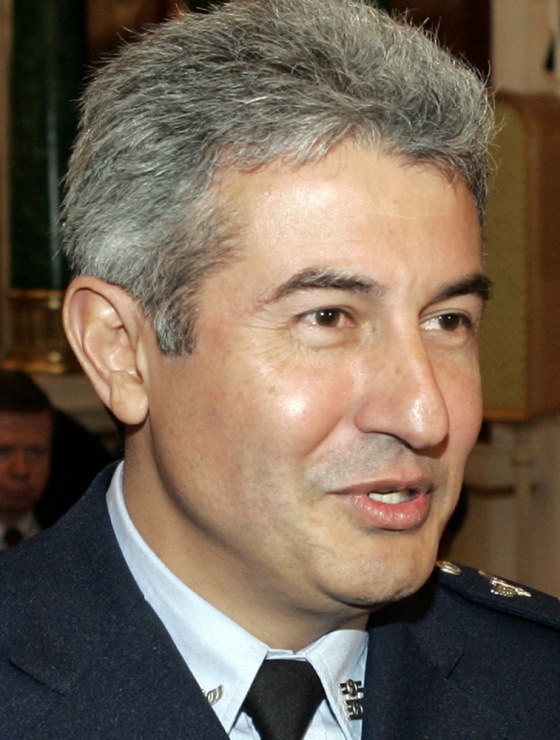
A Russian rocket will take Brazil's first astronaut into space next year for a fee of up to $20 million, representatives of the two countries announced Tuesday.
With the U.S. shuttle fleet grounded, Russian spacecraft bear responsibility for shipping crew and supplies to the international space station — but they can sell spare seats to other nations and private spaceflight participants.
Former test pilot Marcus Pontes said he would spend about 10 days in space, whereas the two-member Russian-U.S. crew he would fly with was expected to stay in orbit for six months.
"I started as a technician on the railroad, so my first dream was to join the air force and fly fighters. While I was a pilot, I developed the dream about space," he told reporters.
The last person to buy a ticket on a Soyuz rocket was millionaire entrepreneur and scientist Gregory Olsen, who returned safely to earth last week.
Brazil originally chose Pontes to be their first man in space in 1998. He had previously trained with NASA to fly on one of the shuttles.
But the fleet was grounded after the shuttle Columbia disintegrated in 2003, killing all seven astronauts aboard. After extensive modifications, NASA returned to flight in July with the launch of the shuttle Discovery, but continuing problems with the external fuel tank's insulation led the space agency to delay further flights until next May at the earliest.
By that time, Pontes may have had his own turn in space.
"We hope that the Brazilian astronaut will fly at the end of March next year. ... The cost of the contract, as always, is up to $20 million," Anatoly Perminov, the head of Russia's Federal Space Agency, told reporters.
The deal was signed while Brazilian President Luiz Inacio Lula da Silva was visiting Moscow.