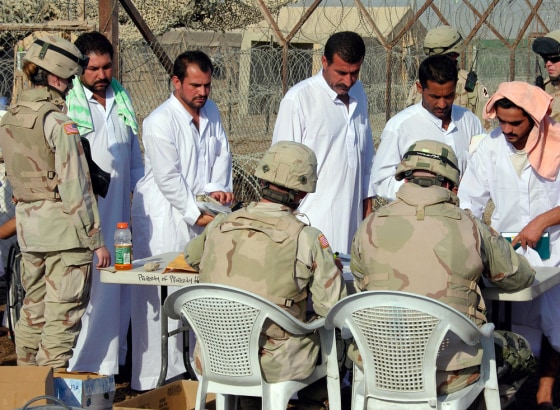
The U.S. military announced Saturday that it has released nearly 1,000 prisoners from Abu Ghraib prison in response to a request by Iraqi authorities.
The move, the largest prisoner release to date, followed appeals by Sunni representatives to start releasing thousands of prisoners who have been languishing in the jail for months without being charged.
After a meeting with President Jalal Talabani Thursday, Sunni negotiator Saleh al-Mutlaq said the president agreed to release many detainees before the Oct. 15, referendum on the constitution. Al-Mutlaq said hundreds of detainees, most of them Sunni Arabs, were to be set free.
“This major release ... marks a significant event in Iraq’s progress toward democratic governance and the rule of law,” the U.S. statement said.
“Those chosen for release are not guilty of serious, violent crimes — such as bombing, torture, kidnapping, or murder — and all have admitted their crimes, renounced violence, and pledged to be good citizens of a democratic Iraq.”
Abu Ghraib prison, built by Saddam Hussein’s regime in the 1970s on the outskirts of Baghdad, was retained as a major detention center by the U.S. occupation authorities after the occupation of Iraq in 2003. It gained international notoriety after a number of U.S. military personnel were charged with humiliating and assaulting detainees at the facility.