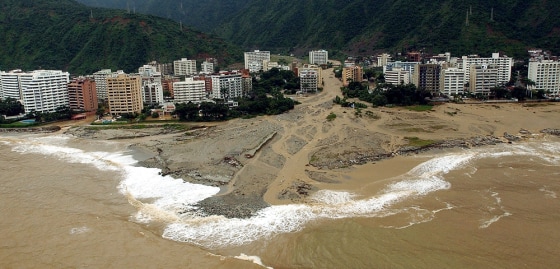
While the earthquake in Indonesia and last December's Asian tsunami have focused attention on natural disasters, hundreds of smaller disasters cause widespread devastation every year.
The danger and adverse economic impacts from such threats as earthquakes, tsunamis, cyclones and hurricanes is increasing as the world's population becomes more urban and concentrated in hazard-prone coastal regions, according to a new report released Tuesday.
Some 70 percent of the world's population is at risk for drought and 82 percent is in areas that are subject to flooding, according to the Earth Institute at Columbia University and the World Bank.
Strategies for minimizing the impact of disasters include strengthening building codes, instituting early warning systems and, in the case of drought, using seasonal climate predictions, said Maxx Dilley, a research scientist at Columbia's International Research Institute for Climate Prediction and one of the authors of the report.
"What we would like to see happen is countries managing the risks instead of managing emergencies," Dilley said.
According to the report, many people in the developing world live in areas that are subject to multiple hazards.
In 35 countries, more than 5 percent of residents live in an area identified as relatively high in mortality risk from three or more hazards, the report found. More than 90 countries have more than 10 percent of their total population in areas at relatively high mortality risk from two or more hazards. And 160 countries have more than 25 percent of their total population in areas at relatively high mortality risk from one or more hazards.
But since underdeveloped countries have other problems such as AIDS and poverty, "the fact that you're on a fault line or in an area where El Nino makes the climate very variable just may not be the most pressing thing on your screen," Dilley said. "But it is better to be aware of the potential for disaster and then be doing something about it."