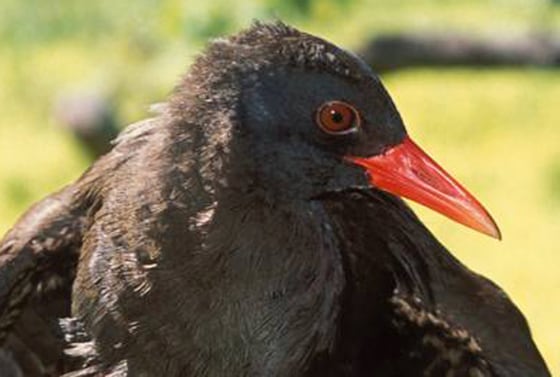
Scientists have discovered a new species of flightless bird on a remote island in the Philippines, the conservation group BirdLife International said Tuesday.
The rare find is dramatic, as flightless birds on small islands are especially vulnerable to extinction from human activities.
Many of the island species that have been categorized by science were long gone when biologists unearthed their bones.
BirdLife International said the proposed name for the bird is the Calayan rail, with the scientific name Gallirallus calayanensis. The bird, about the size of a crow, was found on the island of Calayan in the northern Philippines about 40 miles (70 kilometers) off the coast.
“The Calayan rail is a relative of the internationally familiar moorhen, with bright red beak and legs contrasting sharply with its dark plumage,” BirdLife said in a statement. “But unlike its familiar relative, the Calayan rail is flightless, or nearly so, and found only on the small island after which it is named.”
One or two new bird species are uncovered each year, but this rail’s nature and unexplored location make it especially intriguing.
“This is exceptional because it is flightless, and no ornithologist had explored the island since 1903,” Richard Thomas of BirdLife told Reuters by telephone from the group’s British headquarters.
Genevieve Broad, a biologist and one of the co-leaders of the Filipino-British expedition, said isolation had protected the species from human encroachment.
“The island is 186 square kilometers and has only 8,500 people who are concentrated in one town in the south. There are few people in the middle of the island (where the birds are found) because there aren’t any roads,” she told Reuters.
Isolation has also proved disastrous for flightless birds in the past. Many that evolved on remote islands with no predators have become what biologists term “ecologically naive” — meaning they do not recognize danger from other animals.
So when humans first arrived on small islands in the past, they found the flightless birds to be easy sources of protein and often wiped them out — with the dodo of the Indian Ocean island of Mauritius being the most famous.
Most of the 22 species of rail that have become extinct since 1600 were flightless. Eighteen of the 20 living species of flightless rail are considered to be threatened.