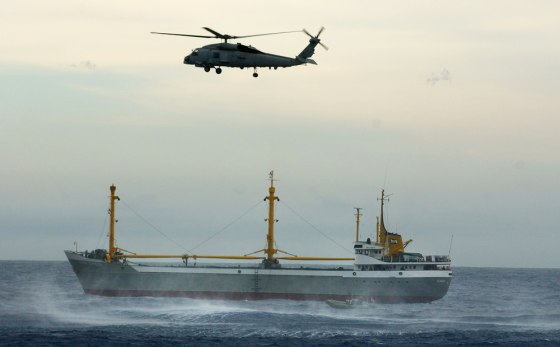
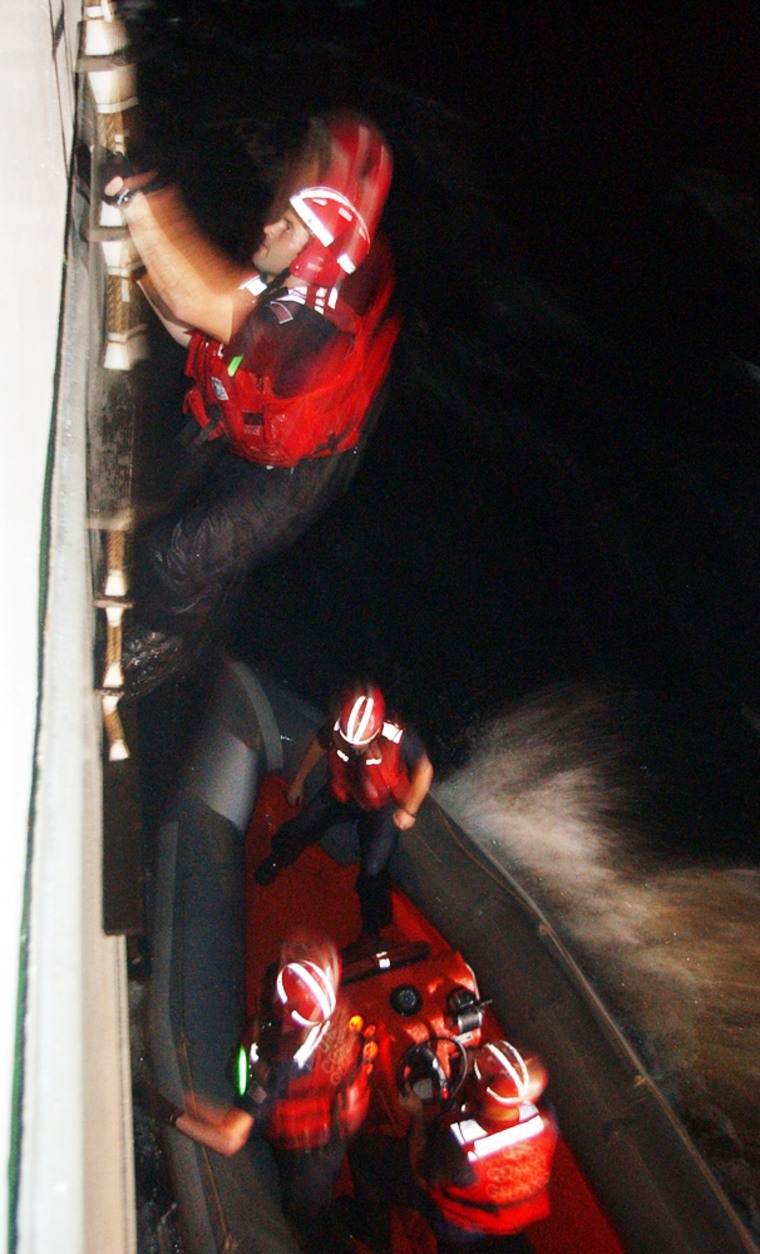
The U.S. Coast Guard boarded the ship in the choppy Caribbean waters and began counting crew members, but the numbers did not match those given earlier.
As helicopters whirred overhead, officials searched below deck and found a man crouched in a closet — a possible terrorist, according to information used in the weeklong anti-terrorist exercise aimed at protecting the Panama Canal, an essential route for international commerce.
While the supposed “terrorist” was just acting, military and security officials believe the canal is a legitimate target.
Eight countries wrapped up intensive joint training Sunday, giving an Associated Press photographer an exclusive spot on the USS Crommelin, where Panamanian officials helped U.S. and Colombian sailors identify suspicious ships that were boarded and searched for weapons.
Three countries — the United States, Panama and Chile — staged similar naval exercises a year ago.
This year, the number of participants grew to include Argentina, Chile, Colombia, the Dominican Republic, Honduras, Panama, Peru and the United States. Ecuador sent observers.
188 million tons of cargo
For days, military and security officials searched ships and scoured Pacific and Caribbean waters for signs of suspicious activity.
An attack on the canal would deal a huge blow to global trade. In 2003, boats making more than 13,000 trips through the waterway carried about 188 million long tons of cargo.
“The canal not only is our most valuable asset, but also it’s an asset for all the countries in the hemisphere,” said Jose Antonio Isaza, director of Panama’s National Maritime Service.
While there is no direct evidence linking the canal with a specific threat, officials worry it could be a likely target.
Al-Qaida suspect was in Panama
In April 2001, a suspected al-Qaida figure identified as Adnan Gulshair El Shukrijumah arrived in Panama legally from the United States and stayed for 10 days, said Panama’s security council chief, Ramiro Jarvis.
Immigration records show that El Shukrijumah then apparently returned to the United States, Panama Interior Department spokesman David Salayandia said. Authorities have been looking for him since.
Last year, the FBI said it wanted to question El Shukrijumah on suspicion of involvement in plotting al-Qaida attacks on the United States or its interests abroad. But he faces no formal charges, officials said.
U.S. authorities said they are investigating whether there are any links between El Shukrijumah and other terrorist suspects, including Jose Padilla, an American arrested in 2002 for allegedly plotting to detonate a radioactive bomb. The two apparently both lived in South Florida in the 1990s.
Panama has taken steps to ensure that the canal is protected. In May, it signed an agreement allowing U.S. officials to board Panamanian flagships and search them for weapons of mass destruction.
The nation is the world’s largest shipping registry, with Panamanian flags flying on 21 percent of all registered ships. Of those 10,400 ships, more than half — about 5,700 — are cargo ships, the Panama Maritime Authority said.
The agreement was similar to an accord the U.S. State Department reached in February with Liberia, the world’s No. 2 registry.
Hundreds involved
The canal training exercises began a week ago with planning, and advanced Tuesday to land and water exercises. They included hundreds of personnel from the army, navy, air force and coast guard.
Four merchant ships were contracted as mock threatening vessels.
Colombian ship commander Pablo Romero, whose crew helped search for the suspicious ships, said the training was important because Panama has a very small naval force.
The canal also is vital to Colombia, which uses the waterway to move ships from coast to coast.
The exercise also demonstrated the worldwide effort at fighting terrorism.
“It offers up a lot of the good training we won’t get at any other time,” said U.S. operations officer Lt. Kimberley Mitchell, 32, of Solon Springs, Wis. “On this whole thing we call the global war on terrorism, it promotes a working relationship.”