Accept these downsides about visiting Britain: You're not likely to personally meet any royals. It will rain. The cathedral you wanted to photograph may be covered in scaffolding this season. Your accommodations could be about the size of a walk-in closet. And you can't possibly see everything on your wishlist in one trip.
But consider the upsides. Even with a dollar exchange rate that's not all that great these days, you can still travel there for often less than it costs to visit another part of the United States. Your accommodations may be small, but they are thrifty, clean, and there's a caloric mountain of a breakfast included in the fee. The natives are friendly, chatty and sometimes can be materially helpful, like giving you a lift to the station after your stay. The country can be beautiful in the rain and soft mist and brilliant in sunshine. Its wealth of historic and natural attractions can be seen and experienced without breaking the bank.
And besides, it's not really a foreign country to Americans, despite that favorite Brit saying (from George Bernard Shaw) about “two countries, divided by a common language.” That means it's easy to skip the packaged vacation and travel independently.
Strategies for saving money
For starters, you usually can book economy class roundtrip flights on major airlines to London from New York for less than $500 and from Los Angeles for under $900. It can even be cheaper if you use Internet flight travel sites or watch for special deals.
Once on the ground, there are a variety of economy rail or bus passes you can use to get around the country—or countries, since Great Britain comprises England, Scotland, Wales and Northern Ireland.
Among the permutations are the Britrail Flexipass (ranging from $239 for four days' travel within 2 months to $519 for 15 days within 2 months, all standard class), which must be purchased before you go. Tourist Trail Passes for service on the National Express bus network range from 49 pounds (about $88) for a day pass to 205 pounds (about $365) for 15 days out of 60. One reasonable arrangement is to use one of the rail passes in combination with the National Express Discount Coachcard (8 pounds, or about $14), which will entitle you to as much as 30 percent off on regular bus fares.
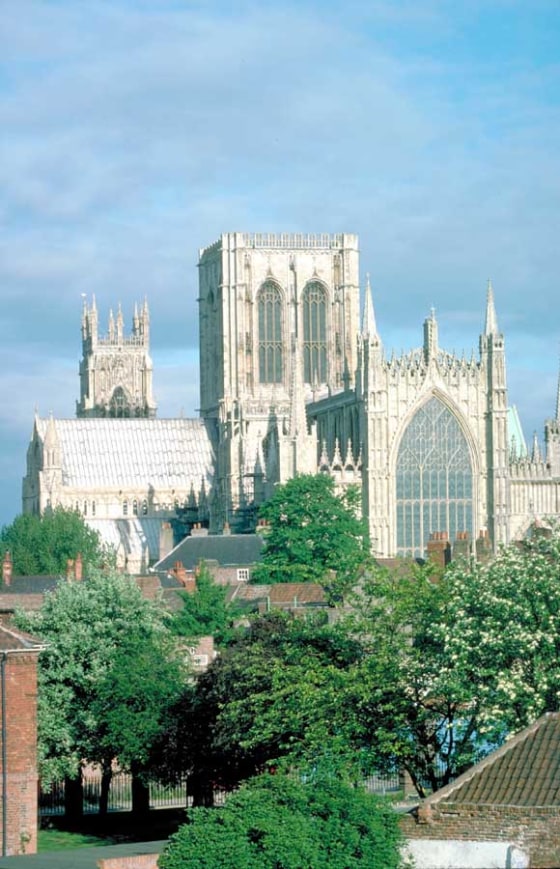
Mainline trains from London can get you into York, in England's northern Yorkshire, in about two hours, or to Edinburgh, Scotland, in under five hours—something to consider before renting a car and driving the 200 or 400 miles through the populous eastern corridor.
There are small hotels around London and other British cities which offer rooms for as little as 50 pounds ($90), per person, per night. Once you get into the countryside, expect to pay around 25-35 pounds ($45-$62) per person, per night at a bed and breakfast or guest house.
A lot of these places can be reserved ahead through the Web, but rooms also can be booked on the spot for you by many of the 800-plus local Tourist Information Centres.
Seeing the sights
For some travelers, the best British attractions are free and can be seen or experienced along the way: green rolling hillsides squared with hedgerows, the chalky seacliffs, the fields of yellow rape, the mountains and lakes of the north. But undeniably, you'll also want to see some of the historic sites such as royal palaces, great houses, and the cathedrals and churches.
The latter straddle between two roles as religious houses and tourist attractions. There are thousands of small chapels and churches of historic interest whose doors are left open for touring visitors, and they usually have discreet collection boxes for donations. The larger, more famous cathedrals and churches, like Westminster Abbey and St. Paul's in London and the Minster at York, have formal admission fees to both defray expenses and regulate traffic that could harm the buildings' fabric.
But you can save money on other attractions by obtaining one of the omnibus passes.
The Great British Heritage Pass ($35 to $102, depending on number of days used) covers 600 properties privately owned or in the care of the National Trust, the National Trust for Scotland, English Heritage, CADW: Welsh Historic Monuments, Treasure Houses of England, Historic Houses Association and Historic Royal Palaces. This is a good bet if you're making your first trip to London and want to visit one or more of the royal properties with fairly pricey entrance fees, such as the Tower of London or Kensington Palace. There is no family pass, and seniors may find it less expensive to get the reduced rate at entrance.
Alternatively, you could become a member of the Royal Oak Foundation, American wing of the National Trust ($50 individual, $75 family). Your card will cover admission to its 450 properties in England, Wales, Northern Ireland and Scotland for an entire year. This may be more economical, depending on the combination of properties you want to visit. As a member you'll get NT publications by mail and other perks.