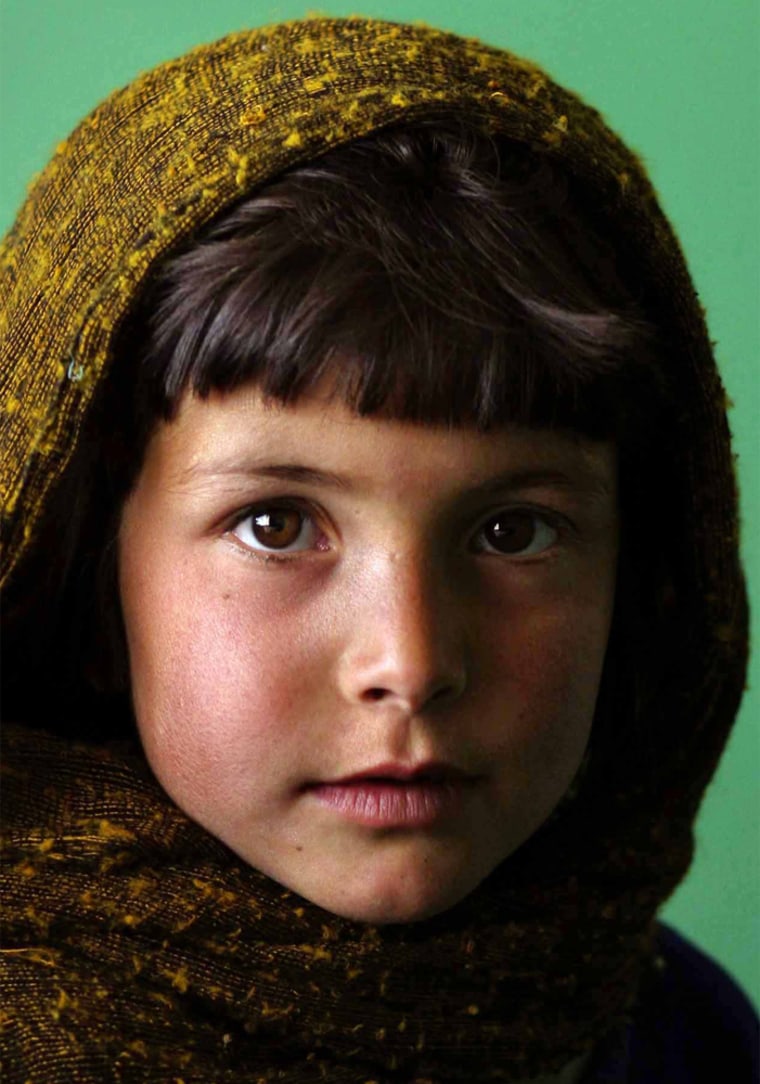
"This is a book," recited Mir Agha, 12, glancing up shyly as he plucked at a wall of wool in the semi-darkness of a mud-walled farmhouse. He tried to remember more of the English he had learned at a refugee camp in Pakistan, but the memories had already faded.
Mir's father was once a farmer, and this village 30 miles north of Kabul was once surrounded by healthy wheat fields and carefully tended vineyards that produced sweet raisins for export. But now most fields are dried up and lifeless, and the family of returned refugees must rely on its children to survive.
"Weaving carpets hurts your fingers," Mir noted matter-of-factly. His two younger brothers sat beside him, silently working at the carpet loom. His older brother was out on his bicycle, selling used clothes door to door. "I'd like to be a teacher, but I've already forgotten most of what I learned," Mir said.
Difficult homecoming
The homecoming of the Agha family, and tens of thousands of others who fled the fertile Shomali Plain and marauding Taliban forces in the late 1990s, should have been a success story. International aid began pouring into the region almost as soon as the Taliban was driven from power in late 2001, and the U.N. refugee agency was waiting for the returnees with open arms.
Today, after two years of massive resettlement, the Karabagh town center is deceptively busy. There is a well-equipped hospital, a noisy livestock fair, a crowded afternoon English academy, a bazaar stocked with farm implements and a brand-new community radio station, financed by the United States.
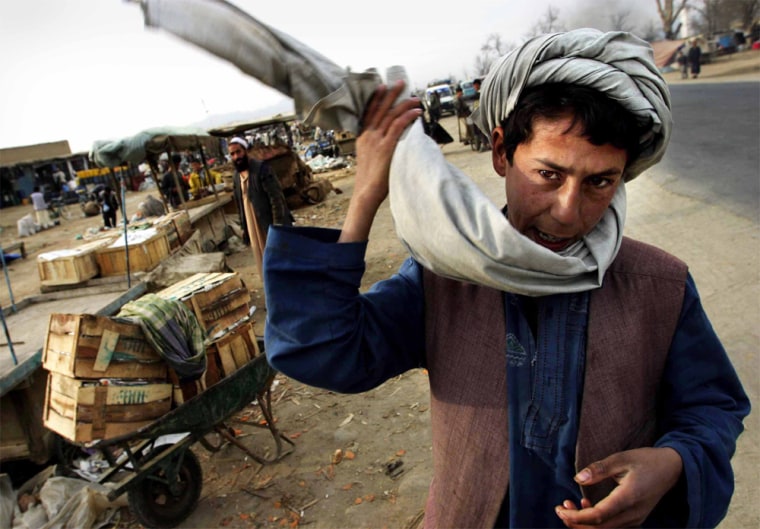
Just beyond the market, however, stretch acres of parched earth, shriveled grapevines and meager wheat, yellow from lack of nourishment. Many farmers, returning to land stunted by years of war and drought, have been unable to coax their fields back to life. To make matters worse, residents said, powerful militia bosses have diverted the region's only canal to their own lands, and civilian authorities do not dare challenge them.
"The commanders made the river detour, and so all our land is wasted. We would have to fight them to get the water back, and no one wants war anymore," said Mahmad Nawab, a farmer who was carrying fertilizer in a wheelbarrow.
'Scorched earth' campaign
Karabagh and other districts in Shomali suffered especially harsh punishment from the Taliban because the area was on the front line of the radical Islamic movement's fight against the Northern Alliance militia, an opposition force led by the late Ahmed Shah Massoud.
In a vengeful "scorched earth" campaign in 1999, the Taliban burned houses and crops, hacked fruit trees and dynamited irrigation wells. According to the U.N. refugee agency, about 53,000 families fled the region, leaving it virtually abandoned.
But once the Taliban was driven from Kabul in November 2001, Shomali people began returning by the thousands, eager to rebuild and replant. In the process, they received an unusually large amount of foreign aid, partly because the area had been specifically victimized and partly because of its strategic location between the capital and a major U.S. military base. Mines were cleared along the main road and among villages, so farmers could quickly return to their land.
"People brought earth in plastic bags, just to start planting again," said Sharafuddin, 43, a returned refugee who once grew grapes for export but now sells imported wheat in the Karabagh bazaar.
Many Shomali families had already established ties to international aid agencies in the Panjshir Valley, Massoud's stronghold to the north, where they had fled the Taliban's wrath and were housed in refugee camps. Once it was safe for them to return home, the same agencies followed.
In Karabagh alone, more than 1,000 families were given tents for temporary shelter and construction materials, such as roof beams and window glass, to rebuild their homes. Last year, a local clinic was refurbished and later upgraded to a district hospital, and an agricultural development bank was established.
Rebuilding process
Some returning families have done well for themselves, but they tend to be people whose livelihoods do not directly depend on the land, such as Abdul Khaleq, 60, who makes clay bread ovens in his yard. Khaleq said he started out selling small ones to neighbors living in U.N. tents and now has more orders for kitchen ovens than he can fill.
"My back aches from working so hard, but I have a happy life," Khaleq said, shaking hands with a strong, mud-stained grip. His busy mud compound echoed with the squeals and giggles of two dozen children -- some his own, others those of a brother killed by the Taliban who are now his responsibility.
"When we came back, the house was rubble and our only roof was a tarpaulin. Now we have a generator, and we can watch Indian movies every night," Khaleq said proudly. "There is peace, and work, and the gunmen are gone. As long as the American troops stay, they won't be back."
Much of the help for Karabagh has come from the Agency for Technical Cooperation and Development (ACTED), an international charity that operates a variety of community programs, including a tool bank that provides cheap rental tractors, low-cost fertilizer and credit to buy improved seeds.
"We've had a close relationship with the Shomali people for a long time, and they trust us," said Beth Bolitho, an ACTED spokeswoman. But she said the lack of water remains a critical problem, one complicated by ethnic rivalries, geographic disadvantages, the destruction and misuse of water systems and a lack of scientific information. "When you try to address water issues, it's a mine field," she said.
According to residents, the community's long-standing loyalty to the Northern Alliance apparently did not stop the militia's former commanders from diverting its scarce water for their own use. Even in Charikar, the nearby capital of Parwan province, civilian officials acknowledged there was little they could do about the abuse.
"During the resistance [to the Taliban], a lot of rivers were damaged, and some people took illegal streams to private lands. It was a war situation," explained the deputy governor, Khwaja Mahmad. "Some problems we cannot solve, but if our brothers put their guns down and start working for reconstruction, that will help a lot."
Difficult adjustment
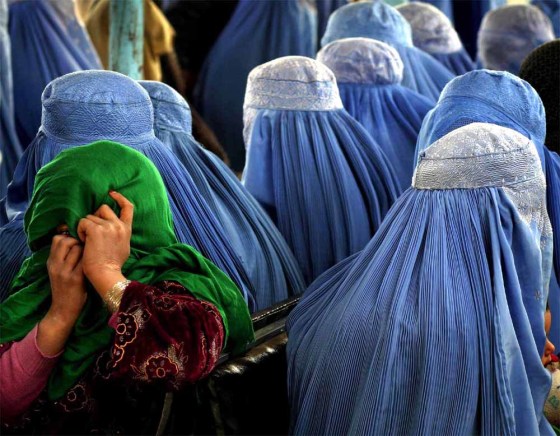
In Karabagh, education is a high priority for many returning families, and an after-school English program on the main street is crammed with boys of all ages. But while some families depend on their young sons to generate income, many do not allow their daughters to attend school at all once they reach puberty.
Thus, hundreds of teenage girls who studied in refugee camps in Pakistan or Panjshir have stepped backward into a conservative rural culture, where sending them to school is considered shameful. On many Karabagh farms, older girls now busy themselves with chores while their younger brothers and sisters attend class.
"We were gone for 10 years, and my daughters went to school in Kabul. They liked it a lot," said Farida, a village woman whose husband sells used books in a sidewalk bazaar. "But here, people would talk about them, so it's impossible."
Farida said it was hard to adjust to the primitive conditions of village life. "I miss having electricity," she said with a sigh.
Still, no one interviewed in Karabagh said they regretted coming home. Of the thousands of Shomali families who were repatriated from Pakistani refugee camps, the U.N. refugee agency said, less than 1 percent had given up and gone back to Pakistan.
For the Agha family, still barely surviving after two years back in Karabagh, mixed emotions persist. One son said he hated living in a hot tent; a daughter said she missed going to school. Their mother, a sturdy, unsmiling woman with callused hands, firmly interjected the final word.
"So we have nothing here, but we had even less there," she said. "Isn't it better to be hungry in your homeland?"