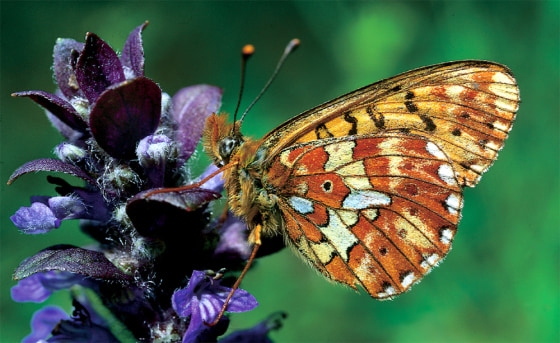
A detailed survey of birds and butterflies in Britain shows a population decline of 54 percent to 71 percent, a finding that suggests the world may be undergoing another major extinction.
Researchers said the study helps support the theory that the sixth big extinction in Earth’s history is under way, and this one is caused by humans.
In a series of population surveys that combed virtually every square yard of England, Scotland and Wales over 40 years, more than 20,000 volunteers counted each bird, butterfly and native plant they could find. An analysis of the findings appears this week in the journal Science.
The results showed that populations of the surveyed species are in sharp decline throughout England, Wales and Scotland, with some species gone altogether.
By the numbers
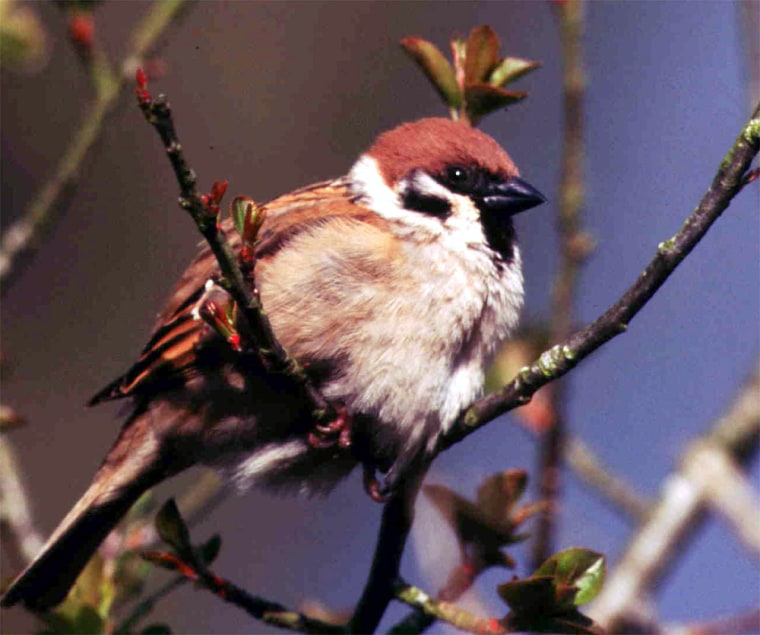
A survey of 58 butterfly species found that some species had experienced a 71 percent population swoon since similar surveys were taken in 1970 through 1982. Some 201 bird species were tracked between 1968 and 1971, and then again from 1988 to 1991. An analysis showed that that avian population had declined by about 54 percent.
Two surveys of 1,254 native plant species showed a decrease of about 28 percent over the past 40 years.
“Population extinctions were recorded in all the main ecosystems of Britain,” the authors report in Science. They suggested that the finding strengthens the hypothesis shared by many scientists that “the biological world is approaching the sixth major extinction event in its history.”
Scott Miller, a biologist with the Smithsonian’s National Museum of Natural History, said the British study was impressive and powerful because it was so thorough.
“The United Kingdom has a monitoring system (for birds, plants and wildlife) that is unmatched,” Miller said. “They may not be representative of the world as a whole, but they have the best data.”
He said the data supports the idea that the rise of humans over the tens of thousands of years along with climate changes are bringing on an extinction of many species and reshaping the natural world in ways that aren’t thoroughly understood.
History of extinctions
Scientists have identified five extinction events in Earth’s history, with some so severe that more than 90 percent of all life forms were killed off. The last and most famous extinction was the Cretaceous-Tertiary event some 63 million years ago that killed off the dinosaurs and allowed the rise of mammals. It is thought to have been caused by an asteroid hitting Earth.
The causes of the other extinctions are not well understood. The largest ended the Permian Period some 250 million years ago. All but about 4 percent of all species disappeared then. There were three other lesser-known events in the Ordovician (435 million years ago), the Devonian (357 million years ago) and the Triassic (198 million years ago) periods.
“We are in the middle of a sixth extinction event that began about 50,000 years ago” with the expanding role in the world of human beings, said Paul Martin, a zoologist and geochemist at the University of Arizona in Tucson. “It’s happening, but it’s slower and it is not clear it will be as severe as some of the others.”
Stuart Pimm, an ecologist at Duke University, said in Science that the British study results “show that we have likely underestimated the magnitude of the pending extinctions.”
Miller and Martin both point to the hundreds of species, mostly large animals and birds, that already are gone, some wiped out directly through human action.
Martin said the fossil records show that the disappearance of many animals in Australia, Madagascar and North America started about the time that humans arrived at those sites. Gone from the natural North American environment, for instance, are mammoths, camels, giant sloths and saber-toothed tigers.
“For tens of millions of years there were much larger animals on this continent,” said Martin. “We have to settle now for deer, antelope and bison. But there was much more” before humans came.
'Much higher rate' than thought
Miller said the most significant thing about the British study is that it makes a detailed survey of insects, specifically the butterfly, and finds that they are in decline.
“They have good evidence of an insect population decline that is at a much higher rate than assumed in the literature,” said Miller. “The butterfly may be a good indicator for what is happening to the other insects. We don’t even know which factors in our changing environment is affecting the insects more.”
The study, conducted by a group of British scientists led by J.A. Thomas of the Natural Environment Research Council, analyzed data collected by an army of volunteers whom Pimm described in Science as “amateurs of a very high level of competence.”