People celebrating St. Patrick’s Day Wednesday can cross one topic of conversation off their lists.
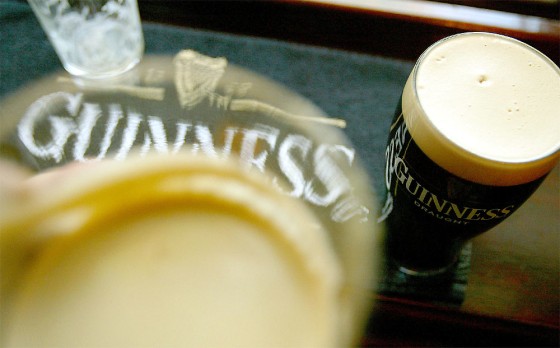
Guinness bubbles really do sink.
Scientists said Monday they had finally proved that the dark stout’s creamy bubbles defy expectations and flow down instead of upwards.
“Our group carried out preliminary experiments at a local pub a few years ago, but the results proved inconclusive,” said Dr. Andrew Alexander, from the University of Edinburgh’s School of Chemistry.
They first thought the dark liquid flowing down as a pint was poured gave the illusion the bubbles were going down as well.
Now close examination has revealed that, as a pint settles, bubbles touching the walls of the glass experience drag, similar to that a person feels sliding a finger along glass, and that prevents them floating up.
The bubbles in the middle however, are free to rise, creating a circular flow within the glass that causes bubbles at the edge to be pushed downwards on the inside surface of the glass.
The Edinburgh team, working with researchers at Stanford University in California have produced high-speed video footage of the sinking bubbles — to put at rest the minds of any drinkers who might have felt they were seeing things.