The Spirit rover went for its longest trip yet on the surface of Mars, traveling just over 88 feet (27 meters) but stopping short of the distance NASA had hoped it would cover, scientists said Monday.
Engineers had hoped the rover would travel 164 feet (50 meters) on its way to a crater known as “Bonneville,” to examine rocks and soil for evidence of past liquid water on the Red Planet, mission manager Jim Erickson said.
“Spirit, she’s put some more territory behind her,” Erickson said. “We’re closer, but not as close as we’d wanted to be.”
The rover didn’t cover the full distance because it spent more time than initially planned studying rocks and soil along the way, he said.
Spirit’s longest previous distance covered in a day was 70 feet (21.3 meters). That occurred last week.
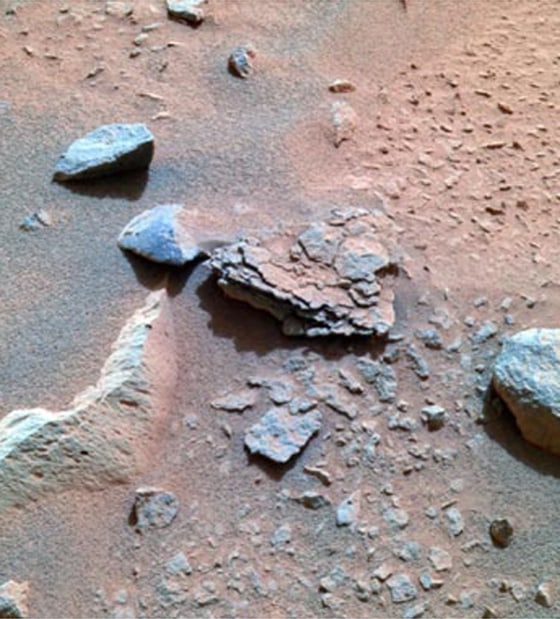
Before setting off for the crater, Spirit investigated a flaky rock dubbed “Mimi.” Scientists want to know why the rock is flaky when nearby rocks are not.
Erickson said flakiness may indicate layering — a possible sign the rock was formed over time instead of all at once, as may be the case with a rock spit from a volcano.
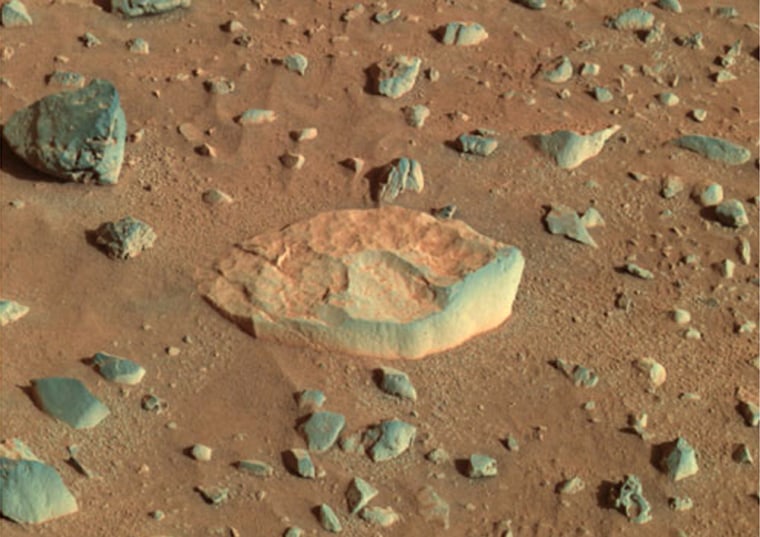
Scientists revised their estimate of the distance to the Bonneville crater, saying it’s about 1,150 feet (350 meters) from Spirit’s landing place. The robot still has about 800 feet (250 meters) to go to reach the crater.
Meanwhile, on the other side of Mars, Opportunity was digging a trench in an area called “Hematite Slope” because it is rich in the iron-bearing mineral that typically forms in water.
“What we’re trying to do is figure if the surface that we see is the same all the way down,” Erickson said.
NASA scientists hoped Opportunity would finish the trench on Monday so they could see if layering had occurred.