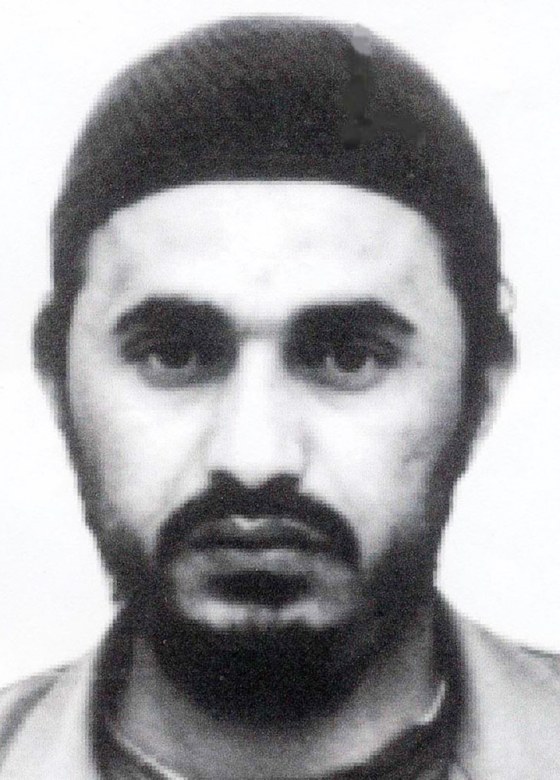
The U.S. Army said on Wednesday it had doubled to $10 million the bounty for a Jordanian who it says has links to al-Qaida and is trying to ignite a civil war in Iraq.
The U.S.-led occupation authority in Iraq said on Monday it had seized a letter from Abu Musab al-Zarqawi outlining a strategy of using attacks to pit Iraq’s majority Shiite Muslims against its Arab Sunni Muslim and Kurdish minorities.
In October, Washington offered a reward of up to $5 million for information leading to the arrest or conviction of Zarqawi, who featured prominently in a presentation of U.S. intelligence by U.S. Secretary of State Colin Powell before the war in Iraq.
“Anybody out there who knows where Zarqawi is, I want to inform you that the reward for Zarqawi was just increased to $10 million,” Maj.-Gen. Charles Swannack, head of the 82nd Airborne which western Iraq, told a news conference in Baghdad.
Washington believes Zarqawi, a Jordanian sentenced in absentia to death in his country for plotting attacks on U.S. and Israeli interests, orchestrated the killing of a U.S. diplomat in Jordan in 2002, ran an Afghan camp specializing in poisons and had ties to a hard-line Islamist group in northern Iraq.
Iraq’s U.S. occupiers have long said they suspect al-Qaida has played a role in the insurgency against U.S. troops and particularly in attacks on civilian targets in Iraq.
U.S. officials obtained the letter last month after U.S. troops in Iraq arrested Hassan Ghul, described as an al-Qaida courier. The letter doesn’t prove President Bush’s pre-war contention that Saddam Hussein had links to al-Qaida, but it does demonstrate that the terror group is trying to get a foothold in Iraq.
Swannack said he believed two devastating bomb attacks near Baghdad on police and new army recruits -- a pillar of plans to put security in Iraqi hands before a planned June 30 transfer of sovereignty -- that killed nearly 100 people showed Zarqawi’s plan in action.
“Attacks on coalition forces have become much more difficult and so you see these people go ahead and try to create problems with the Iraqi security forces, with attacks on lightly armed targets, these police stations,” he said.
Swannack called the bombings an attempt “to create the appearance of Sunni-on-Shia and Shia-on-Sunni violence and to foment a civil war.”