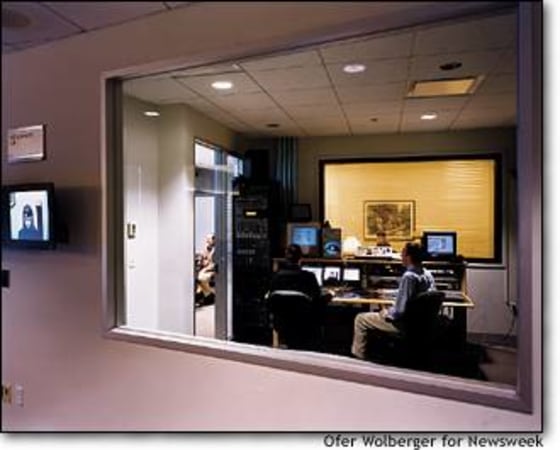
When Steve Elterich started working in tech at Fidelity Investments 15 years ago, one of his main concerns was simply keeping the phone lines open.

NOW HE’S PRESIDENT of Fidelity’s eBusiness division, and Elterich keeps an eye on his desktop computer, which relays to him the image of a 58-foot screen in the company’s Merrimack, N.H., facility, where 20 workers monitor Fidelity data flows over the Internet 24 hours a day. It’s the engine room of the company now—80 percent of Fidelity’s retail transactions are initiated over the Internet. “The migration to the Web in our company has been remarkable,” says Elterich.
Boston-based Fidelity may be in the money business, but from certain angles it looks more like a tech firm. Last year Fidelity spent $2 billion, nearly a quarter of its annual revenues, on technology, and employs more than 5,000 staffers to handle its electronic systems alone. It’s used that infrastructure to become the largest provider of 401(k) plans, and Fidelity handles employee benefits of one kind or another for 14 million employees in 11,000 companies. It also provides back-office services for 170 institutional investment firms.
Few companies have more riding on making their systems easy to use than Fidelity. That’s why it established the Fidelity Center for Applied Technology in Boston three years ago. Here, engineers work with voice recognition, fingerprint and iris-scanning technology that may one day replace the tedious PIN numbers clients need to get access to their data.
Other researchers work with volunteers to assess how different age groups perceive and interact with the Internet. With the leading edge of the baby boomers starting to come into an age when they’ll tap their retirement cash, Fidelity would like to better tailor its computer interface to fit the over-55 crowd. There’s no bell or whistle at FCAT that you won’t see at a tech convention. But it’s never been just about the gadgets or the gizmos at Fidelity. “This is the Center for Applied Technology, not Advanced Technology,” says Charlie Brenner, director of FCAT. “If we can’t use it in our company, we aren’t interested. This isn’t a toy shop.” Good thing, because that’s not play money in all those accounts.
© 2003 Newsweek, Inc.