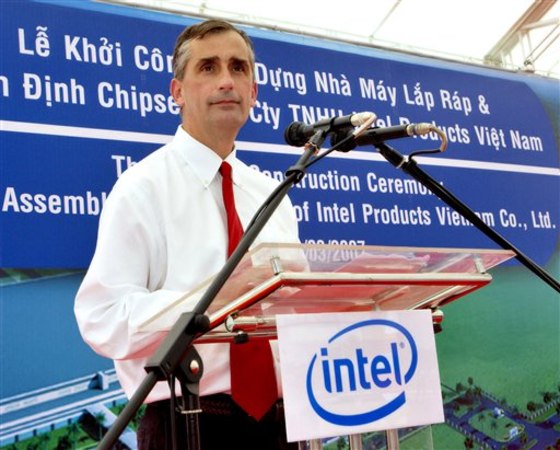
Intel Corp., the world's largest computer chip maker, on Wednesday unveiled details of a new lineup of processors slated for production later this year that promise a performance boost and energy savings because of the transition to a new manufacturing technology.
Santa Clara-based Intel has spent heavily to equip its factories to produce chips on 45-nanometer technology, which shrinks the circuitry's width to 45 billionths of a meter. The new family of chips will boast higher performance than previous generations partly because more transistors can be squeezed onto a single slice of silicon.
Intel plans to introduce six different types of processors, including processors with four computing cores boasting 820 million total transistors. Intel is also using new materials in the transistors that prevent electric current from leaking out, which in turn extends the battery life in laptops.
Intel also disclosed some plans for its next-generation chip design, scheduled to go into production in 2008, that the company claims will deliver "enormous" performance and energy gains.
Intel's plans include integrating onto the processor a feature called a memory controller that the company has historically placed on a separate chip, but rival chipmaker Advanced Micro Devices Inc. has long used it on the same piece of silicon to access data on external memory chips.