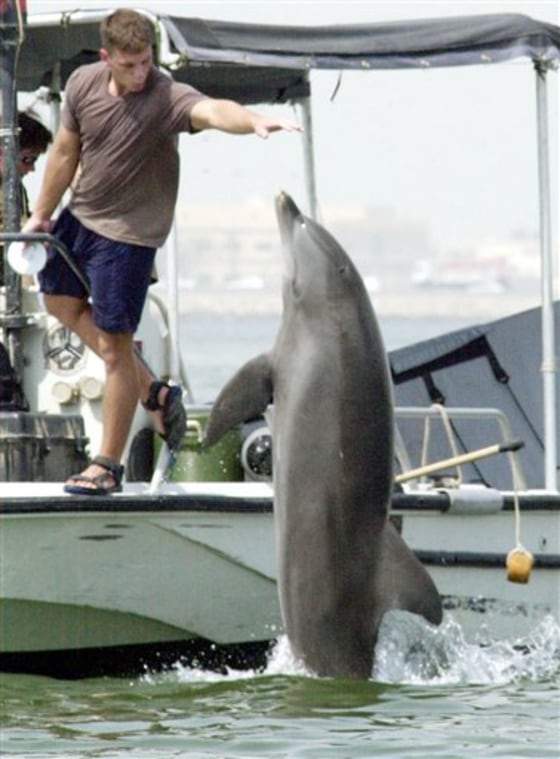
Critics of a Navy plan to use dolphins and sea lions to guard waters off the coast of a major submarine base say the ocean is too cold for the plan to work.
Other critics who showed up at a public open house Tuesday questioned the use of live animals rather than sophisticated technology at Hood Canal, home of the West Coast Trident submarine base.
The animals are trained to alert a handler when they detect anyone in the water. The handler, in a small boat, then places a strobe light on the nose of the animal, which speeds back and bumps the swimmer. The bump knocks the light into the water, where it floats to mark the spot for security personnel to intercept the intruder.
Navy officials said the dolphins would work for a couple hours at a time before being returned to an enclosure with water conditions similar to those of San Diego.
"That'd be like you and me going into a blizzard for two hours and then put back into a San Diego environment," said Susan Scheirman of Bainbridge Island.
Dorian Houser, a marine mammal physiologist for the Navy, countered that studies show bottlenose dolphins can handle more extreme conditions and deal well with temperatures down to about 40 degrees, which Hood Canal rarely reaches.
The Navy has proposed using as many as 30 dolphins and California sea lions to help protect the sub base, which is believed to contain a large nuclear weapons stockpile.
Nine other options were given less favorable ratings in the Navy's environmental impact statement.
Navy officials note that dolphins and sea lions have guarded the shoreline at a similar sub base in Kings Bay, Ga., for two years.
Leigh Calvez of Bainbridge Island disputed Navy claims that the dolphin-sea lion proposal was the best technology available.
"We don't have anything as good as dolphins to protect us? That's hard to believe," she said.
Navy officials said other options included combat swimmers and remotely operated vehicles that have yet to be developed.
"If only we had the technology to do that," said Tom LaPuzza of the Navy Marine Mammal Program in San Diego. "Someday we will."