Sport utility vehicles are making strides to avoid rollovers, the government says, noting that seven in 10 new SUVs are equipped with rollover-reducing electronic stability control.
The National Highway Traffic Safety Administration released new rollover results for 2006 vehicles Tuesday, finding that 39 SUVs earned four-star ratings. SUVs have showed steady improvements in the testing; two dozen SUVs received four stars last year and only one SUV tested that well in 2001.
No SUV earned a top five-star rating.
The results — available at safecar.gov — are used by consumers to assess a vehicle's ability to reduce rollovers, which kill more than 10,000 motorists in the United States annually.
Electronic stability control is an anti-rollover system in which brakes are automatically applied when the vehicle begins skidding off course, helping to steady the vehicle.
The government's traffic safety agency said 69 percent of all SUVs from the 2006 model year now offer the technology as standard equipment, a significant jump from 43 percent of 2005 SUVs with standard stability control.
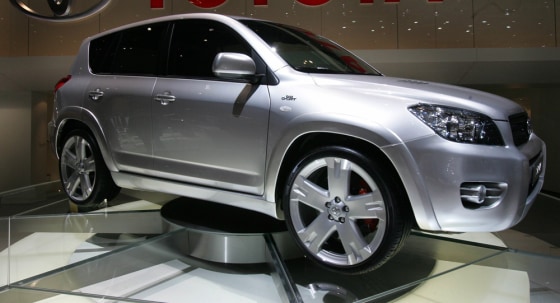
Newly tested SUVs that received four stars included: the Chevrolet HHR, Honda Pilot, Toyota RAV4, Subaru B9 Tribeca, Hyundai Tucson, Mercedes-Benz ML Class, Suzuki Grand Vitara and four-wheel drive versions of the Chevrolet TrailBlazer.
Among top-scoring SUVs, the HHR had a 14 percent chance of rollover and four-wheel drive versions of the Pilot had a 15 percent chance of rollover.
The four-wheel drive version of the Nissan XTerra had a 25 percent chance of rollover, the highest percentage among the new SUVs tested. The 4x2 version of the XTerra, the 4x2 Chevrolet Tahoe and Hummer H3 had a 24 percent chance of rollover. Those vehicles received three stars.
Among passenger cars, the Pontiac G6 and the Buick Lucerne were the only vehicles to receive five stars.
The eight-passenger Chevrolet Express 1500 van was the only new vehicle that tipped over in testing; it received three stars and had a 28 percent chance of rollover. GM spokesman Alan Adler said 2007 versions of the van will have stability control as a standard feature.
The Ford E350 XLT Super Duty van received two stars and had a 30 percent chance of rollover. Ford spokesman Dan Jarvis said the van is safe and noted that some of its ratings were derived from the vehicle's dimensions.
Jarvis said the wheels stayed on the ground during similar internal testing.
"We think that should be a true measure of a star rating," he said.
Under the ratings system, a vehicle with five stars has a rollover risk of less than 10 percent while a four-star vehicle has a 10 percent to 20 percent risk. Three-star vehicles have a 20 percent to 30 percent risk.
Government studies have found stability control reduces single-vehicle sport utility crashes by 67 percent and one-car crashes by 35 percent compared with the same models sold in previous years without the technology.
NHTSA is expected to issue a new proposal later this year specifying a performance criteria for stability control, which was first introduced by Mercedes-Benz in 1995.
Robert Strassburger, the Alliance of Automobile Manufacturers' vice president of safety, said automakers have aggressively implemented the technology into vehicles because it saves an estimated 6,000 to 7,000 lives a year, making it comparable to seat belts in terms of safety benefits.