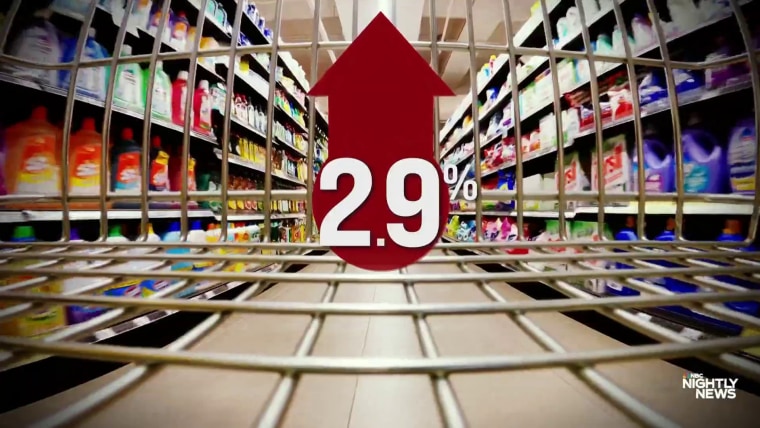
Grocery price growth, once the scourge of the post-pandemic inflation surge, has finally settled down.
On Wednesday, the Bureau of Labor Statistics reported that food-at-home prices increased 1.1% year-on-year — the ninth-straight month of sub-2% increases.
For the average consumer, the new price levels can take years to adjust to, economists say. Between January 2021 and December 2022, grocery prices shot up more than 20%.
As of July, consumers pay about $0.80 more for a gallon of milk (about $4 total), though dairy prices were already increasing before the pandemic hit. Likewise, a loaf of wheat bread is now $0.80 more to about $2.69 and a pound of ground beef is up $1.62 to $5.50.
One outlier is eggs. The cost of a dozen — though volatile thanks to avian flu — has doubled to more than $3.
Still, between January 2023 and July 2024, average grocery prices have only increased a cumulative 1.4%.
A host of factors have been blamed for the price surge, including busted supply chains, the war in Ukraine, higher wages for front-line and food-production workers, and excessive profit-taking by grocery companies — dubbed "greedflation," though some economists dispute how significant this was.
Yet supply chains have now been largely restored, and the impact from the war in Ukraine has mostly receded. Meanwhile, wage growth has cooled, and large food suppliers have recently begun facing slower or lower sales.
Food companies are also signaling that customers are simply fatigued by the price increases and, especially among middle- and lower-income consumers, can now afford basic necessities and not much else.
“There is clearly a consumer that is more challenged, and a consumer that is telling us that in particular parts of our portfolio, they want more value to stay with our brands,” Ramon Laguarta, PepsiCo’s chief executive, said in the company's earnings call last month.