The U.S. and China have reached an agreement on trade, representatives from both sides said after a second day of high-level talks in London.
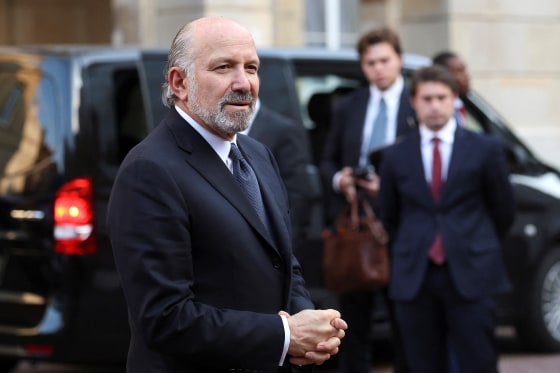
“We have reached a framework to implement the Geneva consensus and the call between the two presidents,” U.S. Commerce Secretary Howard Lutnick told reporters.
That echoed comments to reporters from Li Chenggang, China’s international trade representative and a vice minister at China’s Commerce Ministry.
U.S. President Donald Trump and Chinese President Xi Jinping spoke by phone late last week, stabilizing what had become a fraught relationship with both countries accusing each other of violating the Geneva trade agreement. At a meeting in Switzerland in mid-May, the world’s two largest economies had agreed to a 90-day suspension of reciprocal tariffs added in April, and a rollback of certain other measures.
Lutnick said he and U.S. Trade Representative Jamieson Greer will head back to Washington to “make sure President Trump approves” the framework. If Xi also approves it, then “we will implement the framework,” Lutnick said.
The fact that the two sides will now brief their leaders “is a clear sign that some disagreements or unresolved details still require internal discussion,” said Jianwei Xu, senior economist at Natixis.
The framework agreement signals a commitment to de-escalate and continue the dialogue process, but whether it will lead to “concrete agreements or substantive breakthroughs” continues to be uncertain, he said.
Chinese restrictions on rare earth exports to the U.S. are a “fundamental part” of the latest agreement and the U.S. expects the issue “will be resolved in this framework implementation,” Lutnick said.
He indicated that U.S. restrictions on sales of advanced tech to China in recent weeks would be rolled back as Beijing approves rare earths exports.
“This deal is taped together by the two sides’ leverage over each other, not common principles or shared interests,” said Scott Kennedy, senior adviser and trustee chair in Chinese Business and Economics at the Center for Strategic and International Studies in Washington. “The chances for further stops and starts is quite high.”
While Chinese state media had been quick to announce Xi’s call with Trump last week, Beijing’s official mouthpieces were conspicuously silent more than one hour after Lutnick’s comments, except for a lower-profile mention citing Vice Commerce Minister Li as saying that the talks helped build bilateral trust.
On Tuesday local time in London, U.S. Treasury Secretary Scott Bessent told reporters he was headed back to the U.S. in order to testify before Congress.
Chinese Vice Premier He Lifeng, the lead negotiator on trade talks with the U.S., and Chinese Minister of Commerce Wang Wentao also participated in this week’s discussions.
China’s CSI 300 index was trading slightly higher, while U.S. stock futures were down as investors awaited details on the trade framework.